

Last Updated on October 31, 2026
Choosing the best spinning reel is easier when you start with the rod, line and fishing conditions rather than the highest bearing count. A lightweight reel can make long sessions more comfortable, while a larger reel provides line capacity for heavier work. Drag smoothness, gear ratio and resistance to saltwater exposure also matter.
These five spinning reel reviews cover different needs—from a budget-friendly all-rounder to a baitfeeder and a heavy-duty saltwater model. The comparison below shows the first three picks, using each model’s own image and Amazon link.
Our Recommend Top 3 Best Spinning Reel Comparison Table
| Spinning Reel | Reel type & key figures | Best for | What to know |
|---|---|---|---|
 1. KastKing Sharky IIICheck Price |
5.2:1 gearing; 10+1 bearings; carbon-fiber drag (rating varies by size) | Value-focused freshwater and occasional inshore use | Water-resistant design is not fully waterproof; match size to your rod |
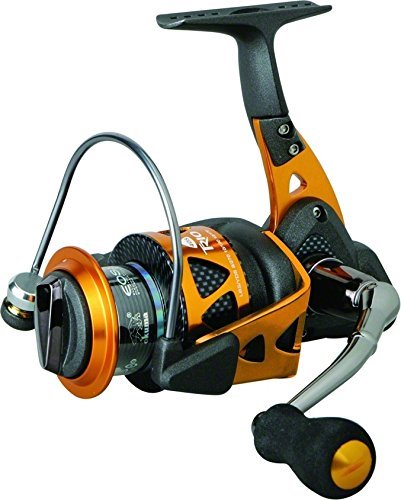 2. Okuma Trio Baitfeeder BF-55Check Price |
4.5:1; 9+1 bearings; approx. 19.8 lb max drag; 12.2 oz | Bait fishing where controlled line payout helps | Specialized baitfeeding switch; heavier than compact reels |
 3. PENN Battle II 8000Check Price |
5.3:1; 30 lb max drag; 44 in retrieve per turn; 30.2 oz | Heavy line, larger fish and surf applications | Oversized and heavy for lightweight freshwater fishing |
Why Choose a Spinning Reel?
Spinning reels are popular because they handle light lures and lines without the learning curve of a baitcasting reel. The spool stays stationary during casting and line comes off its lip, which helps newer anglers manage casts. They are useful for many freshwater techniques and some saltwater applications, provided you choose an appropriate reel and maintain it.
What Features Matter When Choosing the Best Spinning Reel?
Reel size and line capacity
Look at the line capacity for the exact size you intend to buy. Sizes are not standardized across brands, but 1000–2000 reels commonly suit ultralight and lighter freshwater fishing, 2500–3000 models cover many all-round freshwater setups, and 4000 or larger designs are generally for heavier line and tackle. An 8000 reel such as the PENN model reviewed below is not a sensible choice for a small trout rod.
Drag system
A good drag lets line leave the spool smoothly when the fish pulls. The drag setting should match the line and rod, not simply the reel’s maximum advertised figure. Front-drag reels are common on modern spinning tackle; rear drag can be convenient for beginners. Some baitfeeding reels, including the Okuma Trio, add a secondary setting that lets fish run with bait before the main drag is engaged. No single drag layout is universally better.
Gear ratio and retrieve speed
Gear ratio tells you how many rotor rotations occur per handle turn. Higher ratios can retrieve line more quickly, but actual inches per turn also depend on spool size and the amount of line. A moderate ratio is versatile, whereas specialized techniques may call for a faster retrieve or more leverage.
Bearings, body materials and balance
Quality, sealing and placement matter more than the number of bearings. Graphite and composite frames are often lighter; a full-metal frame can resist flex when a reel is under heavy load. Balance the reel with your rod and pay attention to the overall weight if you will be casting for hours.
Braid-ready spools and line management
Check whether the spool is designed for braid and whether backing is recommended. Do not overfill the spool or wind on loose line: both can cause loops and wind knots. Closing the bail by hand, checking the line roller and maintaining gentle tension while retrieving are simple habits that reduce trouble.
Freshwater and saltwater protection
Water resistance is not the same as waterproofing. Even well-sealed reels need care after saltwater exposure. Gently remove surface salt and dry the reel according to the manufacturer’s directions; avoid blasting water into the internal mechanisms. Our saltwater spinning reel guide covers options for coastal use.
Also see our baitcasting reel guide for a different style of fishing, or our fish finder guide if you use a boat.
Jump to the five spinning reel reviews.
Our Recommended Top 5 Best Spinning Reel Reviews
1. KastKing Sharky III Spinning Reel — Best Value All-Rounder
KastKing Sharky III is a value-focused reel that makes sense for anglers who want a versatile setup without an expensive all-metal body. Its reinforced-graphite body and rotor reduce weight, while the machined aluminum spool is designed to accept braided line. KastKing lists 10+1 bearings, a 5.2:1 gear ratio and a carbon-fiber drag stack. Maximum drag varies by reel size, with larger versions rated up to 39.5 lb.
The K.I.S.S. water-resistant design helps limit grit and moisture entering the spool, body and rotor, but it is not a license to submerge the reel. Choose a size that fits your rod and line; the biggest available model is not automatically the best.
Pros: strong feature set for the category, lighter body, braid-ready spool and versatile sizing. Cons: not fully waterproof; actual refinement depends on the specific size and maintenance.
2. Okuma Trio Baitfeeder BF-55 — Best for Bait Fishing
The Okuma Trio BF-55 adds a baitfeeding switch that allows line to leave the spool at low resistance while a fish picks up bait. Disengage the feature and use the main drag when the fight begins. This feature is useful for particular bait-fishing methods but unnecessary if you mainly cast and retrieve lures.
According to Okuma’s BF-55 specification chart, this model has a 4.5:1 gear ratio, 9+1 bearings, a maximum drag of 9 kg (approximately 19.8 lb) and a weight of 345 g (about 12.2 oz). Its crossover aluminum/graphite construction and Dual Force Drag design are intended to provide dependable function in a specialized package. It is neither a tiny ultralight reel nor a particularly high-speed one.
Pros: useful baitfeeding mode, solid frame construction and separate drag functions. Cons: extra weight and complexity compared with simpler reels.
3. PENN Battle II 8000 — Best for Heavier Fishing
PENN Battle II uses a full-metal body, side plate and rotor to support gear alignment under heavy loads. The 8000-size model linked here is for substantial rods and heavier line. It is not a small general-purpose reel, despite how product listings sometimes group different sizes together.
Specifications for the 8000 include 5.3:1 gearing, up to 30 lb drag, 44 inches of retrieval per handle turn and around 30.2 oz of weight. It uses HT-100 carbon-fiber drag washers, a heavy-duty aluminum bail wire and a superline spool. These features make more sense for large fish and heavy applications than for all-day ultralight casting. Battle II is an older PENN generation, so inspect the exact size and condition when comparing it with newer models.
Pros: robust build, high line capacity and a strong drag system. Cons: heavy, comparatively bulky and not suitable for light tackle.
4. Goture Spinning Reel — Budget Alternative
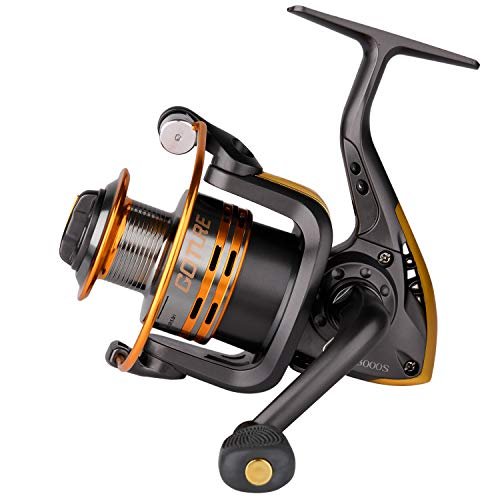
This article’s linked Goture spinning reel is an economical alternative for casual fishing. Check the actual size, drag rating, spool capacity and application before buying, because these figures vary across models and retail configurations. A smooth drag, reliable line roller and properly functioning bail are more important than an impressive list of numbers.
For occasional freshwater use, a simple setup may be sufficient. If you fish in saltwater, check the reel’s stated corrosion protection rather than assuming that every budget reel can tolerate repeated salt spray.
 Check Price
Pros: straightforward entry point for casual use. Cons: exact specifications and suitability need checking for the selected version.
5. Shimano IX 1000R — Beginner-Friendly Rear Drag
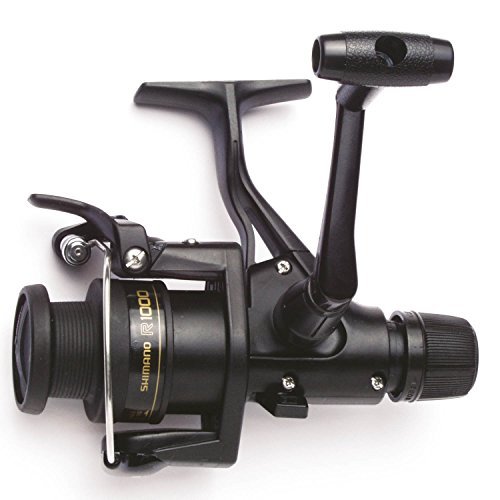
Shimano IX 1000R is a compact, entry-level rear-drag spinning reel designed around simple operation. Its Quick Fire II mechanism is intended to make casting easier for new anglers. Shimano specifies a 4.1:1 gear ratio, 3 kg maximum drag and a weight of about 237 g. Those figures suit lighter freshwater work better than large fish or hard surf use.
The rear drag is accessible, but it is not inherently more durable than a properly built front-drag system. Choose this model for a small, easy-to-use outfit rather than comparing its drag rating directly with the far larger PENN 8000.
 Check Price
Pros: uncomplicated operation, compact size and accessible rear-drag adjustment. Cons: modest drag, slow retrieve and limited heavy-duty use.
Final Thoughts
The best spinning reel is the one that suits your rod and fishing style. KastKing Sharky III is a useful value-minded all-rounder, Okuma Trio BF-55 is specialized for baitfeeding, and the PENN Battle II 8000 is appropriate when you need heavier tackle and line capacity. For small freshwater rigs, a simpler lightweight reel may be easier to handle than either of the larger models.
Best Spinning Reel FAQs
What spinning reel size is suitable for a beginner?
A 2500 or 3000 reel can work well for many all-round freshwater setups, but smaller reels are often better for ultralight rods. Check the manufacturer’s actual weight, line capacity and rod pairing rather than relying only on the number.
Is more drag always better?
No. Smooth drag at the pressure you actually use is more valuable than the highest maximum number. Set your drag appropriately for your rod, line and knots.
Can a spinning reel be used in saltwater?
Only if its design and care instructions suit that environment. Saltwater can corrode metal and damage bearings. Rinse and maintain the reel following the manufacturer’s recommendations.
How can I prevent line twist and wind knots?
Use a suitable line size, avoid overfilling the spool, keep tension on the line and check the bail and line roller. Close the bail by hand when appropriate and replace badly twisted line.