

Last Updated on November 4, 2026
A machete is a specialized outdoor cutting tool, and there is no one design that suits every property. A shorter curved blade may be easier to carry between jobs; a long straight blade provides extra reach for vegetation clearing; and a heavier golok can make sense for some woody growth. Choosing the best machete starts with the work area, the condition of the handle and sheath, and how safely the tool can be stored.
Our comparison focuses on three models with different designs. Five detailed reviews follow, including an important recall notice affecting a particular sheath supplied with one older Gerber Parang model. All product photos and Amazon references are the original ones already used in this article.
Our Recommended Top 3 Best Machete Comparison Table
| Machete | Blade material & size | Construction | Best for | Important trade-off |
|---|---|---|---|---|
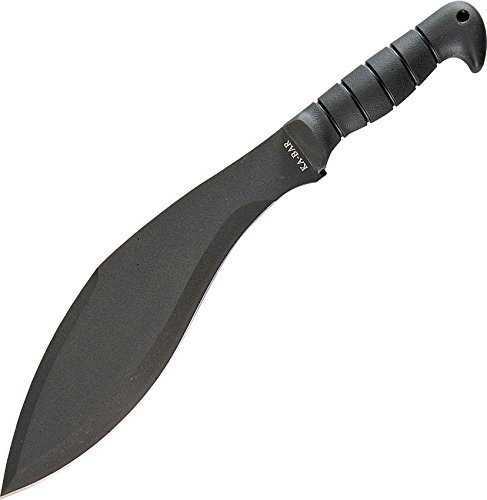 1. KA-BAR Kukri 1249Check Price |
SK5 carbon steel; 11.5-inch blade; 17-inch overall | Kukri curve; TPR handle; polyester/hard-plastic sheath | Compact brush-clearing and supervised grounds work | About 1.3 lb; carbon steel requires dry storage |
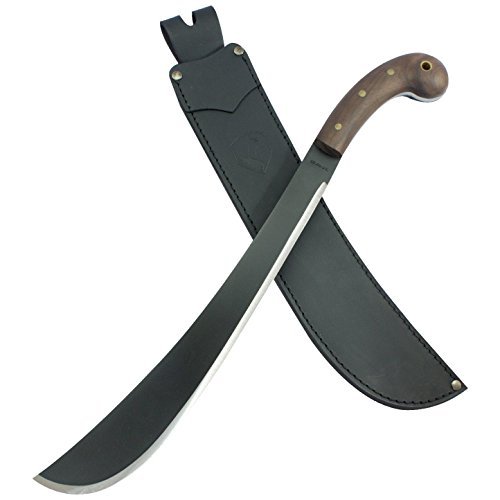 2. Condor GolokCheck Price |
1075 high-carbon steel; approximately 14.5-inch blade | Walnut handle, full tang and leather sheath | A heavier field-clearing tool for woody vegetation | About 30.7 oz; wooden handle and steel require maintenance |
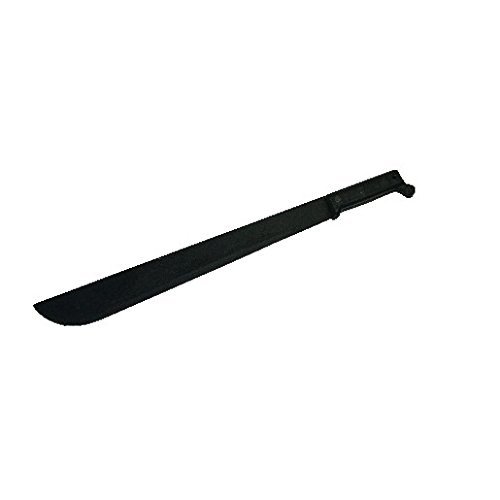 3. Ontario 1-18 Military MacheteCheck Price |
1095 carbon steel; 18-inch blade | Long straight blade with coated finish; polymer handle | Vegetation clearing where longer reach matters | Long blade needs more working clearance; confirm sheath separately |
Common Machete Types and How They Differ
Kukri-style blades
A kukri-style cutting tool has a curved profile and a broader section of blade farther forward. This changes the weight distribution compared with a straight, thin vegetation blade. Models vary widely in size and steel, so the category name alone tells you little about how heavy a particular tool will feel. The KA-BAR and Schrade products reviewed below are both kukri-shaped, but they are not interchangeable models.
Golok and parang styles
A golok commonly has a relatively stout, forward-weighted blade associated with agricultural and brush-clearing work in parts of Southeast Asia. Condor’s Golok is a modern commercial example with a wooden handle and high-carbon steel. Parang designs vary by maker, and some older product listings may have unique sheath issues. Check both the actual blade and its supplied sheath before using or storing either.
Latin, bolo and straight-blade machetes
Long, comparatively slim blades are common for cutting light brush and vegetation. Bolo-style designs may have a wider forward section; a Latin-style blade is generally straighter and often lighter for its length. Ontario’s 1-18 is an example of a traditional longer, straight-edged machete. For especially thick branches or hard wood, a proper pruning saw or another purpose-made gardening tool can be safer and more efficient than trying to force a machete beyond its intended use.
How to Choose the Best Machete for Property Maintenance
Blade length versus available working space
Long blades extend your reach but require more free space around the person using the tool. A compact design can be easier to manage in a cluttered work area, but does not replace loppers or a saw when precise branch removal is needed. Compare the overall length and weight to the job and storage area, not just the cutting-edge length printed in an advertisement.
Carbon steel, stainless steel and coatings
High-carbon steels such as 1075 and 1095 are commonly used in agricultural cutting tools because they can tolerate repeated work and be maintained with appropriate sharpening equipment. Their weakness is rust when left wet. Stainless steels can resist corrosion better but still need cleaning and drying. A black coating helps protect portions of a blade but does not eliminate corrosion on the exposed cutting edge.
Handle condition, tang and sheath
Handle security and surface grip matter as much as the steel. A full tang extends through the grip, but even full-tang tools can have loosened scales or damaged fasteners. Check the handle before each job and stop using a tool if it shifts or shows cracks. Inspect the sheath for broken rivets, torn stitching or areas where the edge may cut through. Store a dry, sheathed machete securely and away from children.
Protective equipment and worksite awareness
Clear other people and animals from the work area, and inspect the ground for rocks, wire and hidden objects that can damage a blade or cause an unpredictable rebound. Appropriate eye protection, sturdy footwear, durable clothing and work gloves help manage common outdoor-cutting hazards. Follow workplace rules and the manufacturer’s instructions; do not use a machete as a self-defense tool.
Use the right tool for the job
A machete is not a replacement for a kitchen or butchery knife. For food preparation, see our butcher knife guide. A smaller knife serves different cutting tasks, as discussed in our specialty knife review. Axes and hatchets are designed around different types of chopping, and our tomahawk versus machete comparison explains some of the differences. The tomahawk guide addresses another tool category.
Jump to all five machete reviews.
Top 5 Best Machetes Reviewed by Experts
From clearing overgrown plantations to managing branches and woody brush, the best machete depends on the work and the environment. These five machete reviews compare different blade shapes, lengths, steels and handle designs, including compact kukri-style models, a heavier golok and a long straight-blade option.
The following product reviews explain the practical strengths and limitations of each model, so you can choose a machete with the right grip, weight and protective sheath for the job. We have also kept the Gerber Parang review, with its important sheath-recall information, separate from the three recommended models.
1. KA-BAR Kukri Machete 1249 — Best Compact Curved Option
The KA-BAR 1249 has an 11.5-inch SK5 carbon-steel blade and an overall length of 17 inches. Its curved kukri-style shape makes it noticeably different from a long, thin Latin-pattern blade. KA-BAR lists a thermoplastic-rubber handle and a polyester/hard-plastic sheath for this model. Its roughly 1.3-pound weight is manageable compared with some heavier goloks, though it still requires proper clearance and care in use.
The blade is not stainless, so dry the steel thoroughly after damp outdoor work and protect the exposed edge before putting it into storage. Check the sheath fit and handle security regularly. This is a useful comparison for those who want a shorter field-clearing tool, not a general replacement for pruning shears or a saw.
| Linked model | KA-BAR 1249 Kukri Machete |
|---|---|
| Blade length | 11.5 inches |
| Overall length | 17 inches |
| Blade steel | SK5 carbon steel |
| Handle | TPR (thermoplastic rubber) |
| Weight | Approximately 1.3 lb |
| Sheath | Polyester / hard-plastic construction |
Strengths: compact overall size, shaped grip and supplied sheath. Trade-offs: curved blade may not suit every clearing job and carbon steel needs corrosion care.
2. Condor Golok — Best Heavier Traditional Pattern
Condor’s Golok combines a stout 1075 high-carbon-steel blade with a walnut handle and a traditional leather sheath. The manufacturer’s Golok design is specified at roughly 14.5 inches of blade length and 20.5 inches overall, with a weight near 30.7 ounces. That makes it substantially heavier than a thin, long vegetation machete. The blade is full tang, with handle scales fixed to the steel.
Its heft may appeal to someone managing woody brush, but it can also become tiring over longer sessions. Walnut needs sensible drying and storage, and the steel must not be left damp inside a leather sheath. Check that the handle remains firmly attached and that the sheath has no exposed or damaged seam before storage.
| Type | Golok-style field cutting tool |
|---|---|
| Blade length | Approximately 14.5 inches |
| Overall length | Approximately 20.5 inches |
| Steel | 1075 high-carbon steel |
| Handle | Walnut wood |
| Construction | Full tang |
| Weight | Approximately 30.7 oz |
| Sheath | Leather |
Strengths: substantial construction, wooden handle and protective leather sheath. Trade-offs: more weight and extra maintenance for carbon steel, wood and leather.
3. Ontario Knife Company 1-18 — Best Long Straight-Blade Design
The Ontario 1-18 is a traditional long-bladed machete made with an 18-inch 1095 carbon-steel blade. Historical Ontario specifications describe an overall length around 23.25 inches, a protective black-oxide blade finish and a durable polymer handle attached with metal fasteners. Its straight, lengthy blade is most relevant where there is sufficient clear working space to manage vegetation.
The longer blade needs careful transport and storage, and a coating is not enough to protect an exposed edge from rust. Look closely at whether a safe, correctly fitting sheath is included with the actual product configuration; do not assume that an older product description includes every accessory.
| Linked model | Ontario Knife Company 1-18 |
|---|---|
| Blade length | 18 inches |
| Overall length | Approximately 23.25 inches |
| Blade steel | 1095 carbon steel |
| Finish | Black-oxide protective coating |
| Handle | Polymer grip with metal fasteners |
| Sheath | Confirm inclusion and correct size |
Strengths: reach for appropriate vegetation tasks and straightforward traditional construction. Trade-offs: lengthy blade needs extra working clearance and corrosion care.
4. Schrade SCHKM1 Kukri — A Larger Curved-Blade Alternative
The Schrade SCHKM1 is a full-tang kukri-style machete with a roughly 13.3-inch blade and a Safe-T-Grip handle. The original model uses black-coated 3Cr13 stainless steel, which should be easier to maintain against ordinary moisture than the high-carbon-steel designs above, though it is not rustproof. Schrade’s product presentation included a fitted nylon sheath with a detachable storage pouch.
This is a relatively substantial curved-blade tool. Its handle texture and overall dimensions may be appealing to some outdoor workers, but the sheath and any supplied accessories should be checked for secure fit before transport. Do not treat the included field accessories as a substitute for appropriate maintenance equipment or worksite safety practices.
| Linked model | Schrade SCHKM1 Large Kukri |
|---|---|
| Blade length | Approximately 13.3 inches |
| Blade steel | 3Cr13 stainless steel, black coated |
| Tang | Full tang |
| Handle | Textured Safe-T-Grip |
| Accessories | Nylon sheath; package contents vary by configuration |
 Check Price
Strengths: full-tang construction, textured grip and a coated stainless-steel blade. Trade-offs: substantial size and additional sheath-accessory components to inspect.
5. Gerber Bear Grylls Parang 31-002289 — Important Sheath Recall
The Gerber Bear Grylls Parang shown in the original article is identified by the linked model number 31-002289. The earlier review described it simply as a useful all-purpose field blade. That misses an important product-safety issue: the U.S. Consumer Product Safety Commission issued a June 6, 2013 recall of particular stitched sheaths supplied with Gerber Bear Grylls Parang machetes, including packaging model 31-002289. The blade could cut through the sheath stitching while being put in or taken out, causing hand injuries.
Safety notice: The recall applies to the affected stitched sheath, not automatically every version of the machete or every revised sheath. Anyone who owns an affected sheath should stop using that sheath, keep the covered tool secured and contact Gerber about the specified fully riveted replacement. See the official CPSC recall details. Because the accessory supplied with the current linked listing cannot be confirmed without a direct inspection, this older model is not included in our Top 3 recommendation table.
| Model reference | 31-002289 |
|---|---|
| Product family | Gerber Bear Grylls Parang |
| Recall date | June 6, 2013 |
| Affected part | Certain stitched nylon sheaths |
| Corrective action | Contact Gerber for the fully riveted replacement sheath |
| Before use | Confirm whether the sheath is affected and follow the recall |
 Check Price
Why it is listed separately: the original product reference and photo are preserved for identification, but the sheath recall is a material consideration. Do not use an affected stitched sheath.
Safe Machete Care, Cleaning and Storage
Inspect the blade, handle and sheath before and after outdoor work. A cracked handle, loose fastener, badly chipped blade or damaged sheath is a reason to stop using the tool until it can be repaired or replaced safely. Wipe away debris and moisture; protect carbon-steel edges against rust in accordance with the manufacturer’s instructions.
Do not store a wet carbon-steel blade inside damp leather or fabric. Secure all sharp tools where children and unauthorized users cannot access them. When clearing property, keep a suitable separation from other workers and bystanders, and use dedicated gardening tools when a job is beyond the machete’s intended capacity.
Best Machete FAQs
Is a longer machete always better?
No. Length increases reach but also changes weight, storage needs and the space required around the worker. Choose according to the vegetation and room available for safe use.
Is carbon steel stronger than stainless steel?
Both categories include many alloys and heat treatments. High-carbon machete steels are often chosen for toughness and maintainability, but need more corrosion care. Stainless alloys generally resist rust better; actual performance depends on the specific material and blade design.
What is the difference between a golok and a Latin machete?
Goloks tend to be shorter and heavier with a broad working blade, while many Latin-style machetes are longer and thinner. Exact dimensions vary by manufacturer.
Is the Gerber 31-002289 machete itself recalled?
The 2013 U.S. recall specifically covered certain stitched sheaths associated with that model. The affected sheath should not be used; see the CPSC recall and contact Gerber for the replacement procedure. This is different from a separate 2012 recall involving other Gerber Parang model numbers.
How should a machete be stored?
Clean and dry the blade, inspect the sheath, secure the edge and store the tool out of reach of children. Follow local rules on transport and any manufacturer-specific care instructions.
Final Verdict
For different vegetation-clearing needs, the compact KA-BAR 1249, heavier Condor Golok and long-bladed Ontario 1-18 offer useful contrasts. Schrade SCHKM1 is another curved-blade design with its own material and storage trade-offs. The linked Gerber 31-002289 belongs outside the Top 3 until the sheath situation is checked against the official recall. Select the best machete for a defined maintenance task, and give safe handling, protective equipment and storage equal priority to blade specifications.