
Last Updated on October 10, 2026
When it comes to everyday carry flashlights, there are plenty of options, from affordable pocket lights to powerful tactical models. However, not every flashlight offers the right balance of size, brightness, and battery flexibility. The Olight S1A Baton is an interesting example of a compact flashlight designed to offer useful performance without being difficult to carry. If you’re comparing different options, our everyday carry flashlight buying guide covers other models worth considering.
Originally introduced as part of Olight’s popular Baton series, the S1A was designed for people who wanted a small flashlight powered by a single AA battery. It also supports a compatible 14500 lithium-ion battery, which allows it to produce significantly more light.
Although the Olight S1A is now an older, discontinued model, it still has several features worth discussing. Its magnetic tailcap, five brightness levels, pocket clip, and compact aluminum body make it suitable for many everyday tasks.
However, there are also some limitations. Unlike newer rechargeable flashlights, the S1A doesn’t include a built-in charging port, and its maximum brightness is available only with the correct battery.
In this Olight S1A Review 2026, we’ll cover its specifications, brightness, battery compatibility, runtime, durability, pros, cons, and whether it’s still worth buying today.
Technical Specifications of the Olight S1A Baton
| Features | Olight S1A Baton |
|---|---|
| Model: | Olight S1A Baton |
| Flashlight Type: | Compact AA/14500 LED flashlight |
| LED: | Cree XM-L2 |
| Maximum Output: | 600 lumens with compatible 14500 Li-ion battery |
| Maximum Output With AA: | 220 lumens |
| Beam Distance: | Up to 118 meters under rated conditions |
| Brightness Levels: | Turbo, High, Medium, Low, Moonlight, plus Strobe |
| Optics: | TIR lens |
| Length: | 3.13 inches / 79.5 mm |
| Diameter: | 0.83 inches / 21 mm |
| Weight: | Approximately 1.85 oz / 52.5 g including battery |
| Body Material: | Aluminum alloy with hard-anodized finish |
| Battery Compatibility: | One AA alkaline, lithium primary, NiMH, or compatible 14500 Li-ion battery |
| Charging Port: | No built-in charging |
| Magnetic Tailcap: | Yes |
| Pocket Clip: | Yes |
| Timer: | 3-minute and 9-minute automatic shutoff options |
| Water Resistance: | IPX8 |
| Impact Resistance: | 1.5 meters |
| Product Status: | Discontinued; remaining stock or used units may be available |
| Original Product Image: | 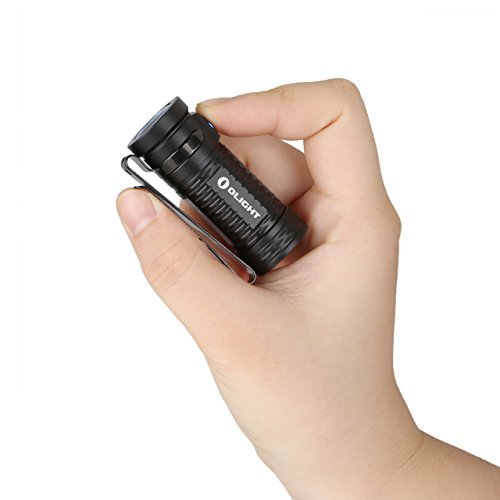 View Original Product Listing |
Important: The original Amazon link above appears to describe a rechargeable magnetic-charging flashlight rather than the AA-powered S1A Baton. It has been preserved with the original image, but the exact product should be verified before purchasing.
The specifications in this table refer to the original Olight S1A Baton, not the S1 Mini, S1R, or newer Baton models.
Olight S1A Review (Video)
Key Features of the Olight S1A Flashlight
The Olight S1A flashlight includes several features that made it appealing when it was originally released. Some are still useful today, especially if you prefer an AA-powered light.
Compact and Lightweight Design
The Olight S1A measures approximately 3.13 inches long and 0.83 inches in diameter.
It’s small enough to fit into a jacket pocket, tool bag, or everyday carry pouch without taking up much room.
Weighing around 1.85 ounces with a battery, it is also relatively lightweight.
The aluminum body has a textured surface that helps provide a secure grip, while the removable pocket clip makes it easier to carry.
Although newer flashlights can be smaller, the S1A remains compact for a single-AA model.
If you prefer a flashlight that uses widely available batteries, our comparison of AA-powered flashlight models covers other designs and battery arrangements.
Multiple Brightness Levels
One of the most useful features of the Olight S1A is its range of brightness settings.
The flashlight offers five brightness levels, along with a separate strobe mode.
These settings allow you to choose a suitable amount of light without unnecessarily draining the battery.
- Turbo: Up to 600 lumens with a compatible 14500 lithium-ion battery.
- High: Up to 220 lumens with a supported AA battery.
- Medium: 50 lumens for general tasks.
- Low: 5 lumens for close-range lighting.
- Moonlight: 0.5 lumens for very low-light situations.
- Strobe: A flashing mode that may be useful for signaling.
For example, Moonlight mode is suitable when you need to find something in a dark room without using a bright beam.
Medium mode provides useful lighting for walking around the house, inspecting equipment, or performing small tasks.
Turbo offers the highest output, but it isn’t designed to remain at 600 lumens continuously.
Flexible Battery Compatibility
Battery flexibility is one of the main advantages of the S1A Baton.
Unlike flashlights that depend on a particular proprietary rechargeable battery, the S1A supports several battery types.
Compatible options include:
- AA Alkaline: Convenient and widely available for occasional use.
- AA Lithium Primary: Useful for storage and use in a wider range of temperatures, subject to the battery’s specifications.
- AA NiMH Rechargeable: A practical option for regular use.
- 14500 Li-ion: Provides the higher voltage needed for the 600-lumen Turbo setting.
However, a 14500 lithium-ion cell is not the same as a standard AA battery, even though the two have similar physical dimensions.
A typical AA alkaline battery has a nominal voltage of 1.5V, while a 14500 Li-ion cell has a nominal voltage of approximately 3.6–3.7V.
Only use compatible cells that meet the flashlight manufacturer’s requirements. Do not assume every 14500 battery is appropriate simply because it fits inside the battery compartment.
Magnetic Tailcap for Hands-Free Use
The S1A includes a magnetic tailcap that allows it to attach to suitable steel surfaces.
This is particularly convenient for tasks where you need both hands free.
For example, you may be able to attach the flashlight to a steel shelf, workshop equipment, or a suitable metal surface while making repairs.
The magnet doesn’t work on every type of metal, including many aluminum and nonmagnetic stainless-steel surfaces.
Make sure the flashlight is securely attached before relying on it for hands-free lighting.
Also, keep the light away from sensitive magnetic equipment when appropriate.
Built-In Timer and Convenient Controls
The Olight S1A Baton uses a side switch to control its lighting modes.
The switch provides access to different brightness levels, including Moonlight and the higher-output settings.
It also includes 3-minute and 9-minute automatic shutoff timer options.
These can be useful when you need light for a short task and don’t want to leave the flashlight running unnecessarily.
Another practical feature is mode memory, which allows the flashlight to return to a previously selected brightness level in normal use.
However, the highest-output settings and special modes have their own control behavior.
Durable Aluminum Construction
The S1A features an aluminum alloy body with a hard-anodized finish.
This construction provides resistance to everyday scratches and wear.
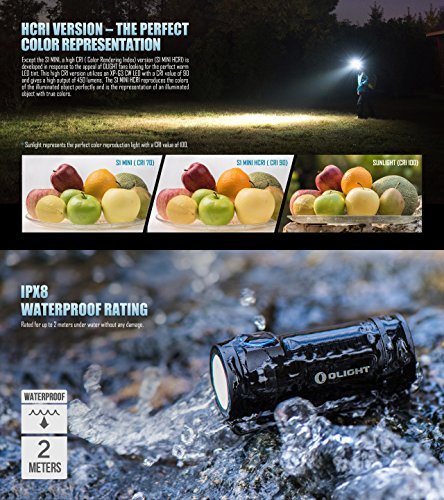
It also has an IPX8 water-resistance rating and a specified impact-resistance rating of 1.5 meters.
These ratings make the flashlight suitable for many outdoor activities, but they don’t mean it is indestructible.
Water resistance can deteriorate if the O-rings become damaged or the tailcap isn’t properly tightened.
If you’re buying a used S1A, inspecting the seals, battery compartment, and switch is particularly important.
Olight S1A Brightness and Runtime
Brightness and battery life are two of the most important considerations when choosing a flashlight.
The S1A performs differently depending on whether you’re using a standard AA battery or a compatible 14500 lithium-ion cell.
Brightness and Beam Performance
With a compatible 14500 Li-ion battery, the S1A can produce up to 600 lumens.
Its rated maximum beam distance is approximately 118 meters under the manufacturer’s test conditions.
However, this doesn’t mean it provides equally bright illumination across that entire distance.
The flashlight uses a TIR (Total Internal Reflection) optic that produces a relatively balanced beam with a useful central hotspot and surrounding spill.
This makes it suitable for close-range and moderate-distance tasks.
For example, it can provide light for finding tools, checking a vehicle, walking around a campsite, or looking inside a storage area.
However, it isn’t designed to compete with modern long-throw flashlights intended for illuminating distant objects.
Battery Runtime Comparison
The following figures are based on Olight’s original published specifications. Actual runtime may vary with battery condition, temperature, and use.
| Mode | AA Lithium Primary | AA Alkaline | 14500 Li-ion |
|---|---|---|---|
| Turbo | Not available | Not available | 600 to 300 lumens; approximately 1 minute plus 60 minutes |
| High | 220 to 100 lumens; approximately 110 plus 30 minutes | 220 to 100 lumens; approximately 12 plus 80 minutes | 220 to 100 lumens; approximately 100 plus 10 minutes |
| Medium (50 lm) | 10.5 hours | 4.5 hours | 6.5 hours |
| Low (5 lm) | 80 hours | 75 hours | 60 hours |
| Moonlight (0.5 lm) | 25 days | 20 days | 15 days |
The stepped-output figures show that the light reduces brightness during operation rather than maintaining its initial output for the entire period.
This is especially noticeable in Turbo mode, where the initial 600-lumen output drops to a lower level after approximately one minute.
Important: Using a rechargeable 14500 battery doesn’t automatically provide longer runtime in every mode. Its main advantage in this flashlight is access to the higher Turbo output.
 View Original Product Listing
Does the Olight S1A Have USB or Magnetic Charging?
No. This is an important difference between the S1A and several other Olight Baton flashlights.
The original S1A Baton does not have built-in USB charging or a magnetic charging contact.
Its tailcap contains a magnet for mounting the flashlight to suitable metal surfaces, not for charging the battery.
If you use a rechargeable AA NiMH or compatible 14500 Li-ion battery, you’ll need an appropriate external battery charger.
Never attempt to recharge a disposable AA alkaline or primary lithium battery.
Also, don’t confuse the S1A with rechargeable models such as the S1R Baton, which use different batteries and charging arrangements.
By 2026, built-in USB-C charging and rechargeable systems are common in modern pocket flashlights. If charging convenience is important to you, compare the S1A with the Fenix UC35 V2.0 rechargeable flashlight or other models designed around built-in charging. Keep in mind that the UC35 is larger and serves a different purpose than the compact S1A.
Real-World Uses for the Olight S1A
The Olight S1A is a practical flashlight for several everyday situations.
Home and Emergency Lighting
Its compatibility with standard AA batteries makes it useful as a backup flashlight for household emergencies.
You can store suitable spare batteries separately and replace them when needed.
For long-term storage, follow battery manufacturer recommendations and periodically check for corrosion or leakage.
Camping and Hiking
The compact size makes the S1A easy to pack alongside camping gear.
Its Moonlight and Low modes are useful for tasks around a tent or campsite where maximum brightness isn’t necessary.
However, for longer hikes or nighttime navigation, a headlamp may offer better hands-free comfort.
Workshop and Automotive Tasks
The magnetic tailcap can be useful when checking equipment or working around a vehicle.
For example, you may be able to mount the light to a suitable steel surface while inspecting components.
However, never attach it where it could fall into moving machinery, belts, fans, or other hazardous equipment.
Also, avoid leaving the flashlight near hot engine components.
Everyday Carry
The pocket clip and compact body make the S1A suitable for carrying in a pocket, bag, or organizer.
Its lower brightness settings are useful for reading labels, finding dropped items, or navigating dark areas.
However, its older design is less compact than some newer rechargeable EDC flashlights offering similar or higher output.
If size matters more than maximum brightness, our pocket-sized flashlight reviews provide additional compact options for everyday carry.
Pros and Cons of the Olight S1A
Pros
- Flexible Battery Options: Supports common AA batteries and compatible 14500 Li-ion cells.
- 600-Lumen Maximum Output: Provides useful brightness with the correct battery.
- Compact Design: Easy to carry in a pocket or small bag.
- Magnetic Tailcap: Convenient for hands-free lighting on suitable metal surfaces.
- Multiple Brightness Modes: Allows you to select the appropriate amount of light.
- Efficient Low Modes: Long published runtimes on low-output settings with suitable batteries.
- Durable Body: Aluminum construction with IPX8 water resistance.
- Useful Beam Pattern: TIR optics produce a balanced beam for everyday tasks.
Cons
- Discontinued Model: Finding an authentic new unit may be difficult.
- No Built-In Charging: Rechargeable batteries require an external charger.
- Limited Turbo Runtime: The maximum 600-lumen output steps down quickly.
- Battery-Dependent Brightness: Standard AA batteries cannot provide the 600-lumen Turbo output.
- Older Design: Modern EDC flashlights may offer higher output, charging convenience, and additional features.
- Limited Availability of Support: Warranty and replacement-part availability should be confirmed for older or secondhand units.
Olight S1A vs Newer EDC Flashlights
The S1A’s biggest advantage is its battery flexibility.
Many newer EDC flashlights use built-in or manufacturer-specific rechargeable batteries. While these designs can make charging more convenient, they may offer fewer options when the battery runs out.
The S1A lets you choose between a standard AA battery and a compatible rechargeable 14500 cell.
However, newer flashlights may provide higher sustained brightness, improved thermal regulation, more compact designs, and convenient charging ports.
If you’re buying a flashlight for the first time in 2026, don’t choose the S1A simply because it was once a popular model.
Compare its battery flexibility, actual condition, availability, and price against current alternatives.
What to Check Before Buying an Olight S1A in 2026
Because the original S1A is discontinued, you may come across used products, remaining stock, or listings with confusing model descriptions.
Before buying, check the following:
- Exact Model: Confirm that the flashlight is the AA-powered S1A Baton, not an S1, S1R, or S1 Mini.
- Battery Compartment: Look for corrosion, damaged contacts, or signs of battery leakage.
- Switch and Modes: Confirm that the controls and brightness settings operate correctly.
- Tailcap and Seals: Check the threads, O-ring, and magnetic tailcap.
- LED and Lens: Look for damage or unusual discoloration.
- Availability: Compare the asking price with suitable newer AA and rechargeable flashlights.
- Warranty: Verify whether any manufacturer or seller coverage still applies.
Pay particular attention to Amazon listings. An advertisement mentioning magnetic charging may refer to a different Olight model rather than the S1A Baton.
 View Original Product Listing
Product verification: The original linked listing is not confirmed to be the S1A Baton. Check the manufacturer’s model number before purchasing.
Final Verdict: Is the Olight S1A Worth Buying in 2026?
After reviewing its features and specifications, the Olight S1A Baton remains an interesting flashlight for people who appreciate a compact design and flexible battery options.
Its support for AA and 14500 batteries, magnetic tailcap, TIR optics, and multiple brightness levels make it useful for everyday lighting and occasional outdoor activities.
However, it’s important to remember that the S1A is an older model. It doesn’t include modern charging features, and its 600-lumen Turbo mode is available only briefly with the correct battery.
Availability is another concern. Since the flashlight has been discontinued, an older used unit may not offer the same value as a current model with updated features and warranty coverage.
Our recommendation: If you already own an Olight S1A in good condition, it can still serve as a useful everyday flashlight. If you’re buying one in 2026, make sure the price is reasonable and the model is genuine.
For most buyers looking for a brand-new EDC flashlight, comparing current AA-powered and rechargeable models before deciding is the better approach.
Ultimately, this Olight S1A Review shows that its main strengths are battery flexibility, portability, and practical low-output lighting rather than cutting-edge performance.
FAQs
1. Is the Olight S1A still worth buying in 2026?
The Olight S1A can still be useful if you want a compact flashlight that supports AA and compatible 14500 batteries. However, it’s an older discontinued model. If you’re shopping for a new flashlight, compare its condition and price with currently available alternatives before buying.
2. What batteries does the Olight S1A use?
The S1A supports a single AA alkaline battery, AA primary lithium battery, AA NiMH rechargeable battery, or compatible 14500 lithium-ion cell. The 600-lumen Turbo output requires a suitable 14500 battery. Always follow the manufacturer’s battery requirements.
3. How bright is the Olight S1A Baton?
The maximum output is 600 lumens with a compatible 14500 lithium-ion battery. With a standard AA battery, the maximum output is 220 lumens. The flashlight also offers lower brightness settings for close-range tasks and longer runtime.
4. Does the Olight S1A support USB charging?
No. The original Olight S1A Baton does not have built-in USB or magnetic charging. The magnetic tailcap is used for attaching the flashlight to suitable metal surfaces. Rechargeable batteries must be charged using an appropriate external charger.
5. Is the Olight S1A waterproof?
The S1A has an IPX8 water-resistance rating and a stated impact-resistance rating of 1.5 meters. However, water resistance depends on the condition of the seals and proper assembly. For an older flashlight, inspect the O-rings and tailcap before exposing it to wet conditions.
6. What is the difference between the Olight S1A and S1R Baton?
The S1A is designed around a single AA or compatible 14500 battery and does not provide built-in charging. The S1R Baton uses a different rechargeable battery system and supports magnetic charging. They are separate models with different dimensions, power arrangements, and output specifications.
 View Original Product Listing