
Last Updated on October 12, 2026
When we hear the words “butcher knife,” the first thing that comes to mind is a butcher cutting large pieces of meat. But butcher knives are useful in home kitchens, too. Whether you’re preparing beef, pork, poultry, or large cuts for a family meal, the right knife can make trimming and portioning easier. The best butcher knives offer a sharp blade, a comfortable handle, and enough control to work through meat without unnecessary effort. However, butcher knives are not all designed for the same tasks. Some are suitable for slicing and trimming, while heavy-duty cleavers are intended for tougher chopping jobs. In this guide, we’ll look at five butcher knife options, their features, advantages, limitations, and what you should consider before buying.
Our Recommended Top 3 Best Butcher Knives Comparison Table
| Images | Butcher Knives | Technical specifications |
|---|---|---|
(Value For The Money) Check Price | Ontario Knife Co. 5-Piece Old Hickory Knife Set 705 Read Review | |
 Check Price | Meat Cleaver Heavy Duty - Stainless Steel Chopper Knife with Solid Wood Handle, Professional Quality, for Home & Restaurant Use - 8 Inches Read Review | |
 Check Price | Ontario Knife 7111 Old Hickory Butcher Knife, 10-Inch Blade Read Review |
What Are the Best Butcher Knives?
Butcher knives generally have strong, relatively long blades designed for cutting, trimming, and portioning meat. Many traditional butcher knives feature a curved cutting edge that makes it easier to work around large pieces of meat. However, blade shape and thickness vary depending on the knife’s intended purpose.
The best butcher knives should feel balanced in your hand and provide enough cutting power without forcing you to apply excessive pressure. A sharp blade is important, but the handle, blade material, and overall construction matter just as much.
Before choosing a knife, think about what you normally prepare. A traditional butcher knife is useful for cutting larger portions of meat, while a boning knife is generally better for removing meat from around bones. If you frequently prepare fish, you may prefer a dedicated fillet knife for precise fish preparation.
SAVE TIME: Go Directly to Our Top 5 Butcher Knife Reviews
Butcher Knives vs. Chef Knives
Butcher knives and chef knives can perform some of the same cutting tasks, but they are designed with different purposes in mind.
A chef knife is a general-purpose kitchen tool. It is commonly used for slicing vegetables, chopping herbs, cutting fruit, and preparing boneless meat. Most chef knives have a broad blade with a curved edge that supports a rocking cutting motion.
A butcher knife is designed primarily for working with meat. Depending on the model, it may have a longer, more curved blade that helps with trimming, slicing, and separating larger cuts into manageable portions.
A meat cleaver is different from both. Its broad, heavy blade is designed for chopping tasks, although not every cleaver is suitable for cutting through hard bones. Always check the manufacturer’s intended use.
If you mostly prepare vegetables and boneless meat, a chef knife may be sufficient. If you regularly break down larger cuts of meat, a dedicated butcher knife can be a useful addition to your kitchen.
Qualities of a Good Butcher Knife
When choosing the best butcher knives, consider the following features instead of focusing only on the price or appearance.
1. Blade Material
Most butcher knives use stainless steel or carbon steel blades.
Stainless steel is generally easier to maintain because it resists rust and staining. It is a practical option for home cooks who want a knife that requires relatively little maintenance.
Carbon steel can provide excellent cutting performance and may be easy to sharpen, depending on the steel and heat treatment. However, it is more likely to rust or develop discoloration if it is not cleaned and dried properly.
Neither material is automatically superior in every situation. Blade geometry, hardness, edge quality, and manufacturing all influence cutting performance.
2. Blade Length and Thickness
Butcher knives come in different blade lengths. Smaller models around 7 to 8 inches can be convenient for home kitchens, while longer 10- to 12-inch blades may be more suitable for cutting large pieces of meat.
A relatively thin cutting blade can make precise slicing easier, while a thicker blade may offer additional strength for certain tasks. However, thin blades should not be used to chop through hard bones.
3. Handle Comfort
A comfortable handle is essential, especially if you spend a long time preparing meat.
Wooden handles can provide a traditional appearance and comfortable grip, while textured synthetic handles may be easier to maintain. Regardless of the material, choose a handle that feels secure and allows you to control the knife without excessive gripping force.
4. Blade Design
Traditional butcher knives often have a curved cutting edge and a pointed tip. This design can make it easier to trim meat and work around larger cuts.
Straighter blades may be convenient for long slicing motions, while specialized boning knives are better suited for working close to bones.
5. Maintenance Requirements
Before buying, check whether the knife requires hand washing, special storage, or regular oiling. Carbon steel knives typically need more attention than stainless steel models.
A suitable sharpener is also important. Our guide to choosing a knife sharpener explains several options for maintaining a usable cutting edge.
Top 5 Best Butcher Knives Reviews – 2027 Buying Guide
The following five options cover different cutting needs, from traditional butcher knives to heavy-duty meat cleavers. Some are better suited for everyday meat preparation, while others require more experience or maintenance.
These reviews discuss the listed products and their established characteristics. Product availability, included accessories, specifications, and prices can change, so check the current retailer listing before purchasing.
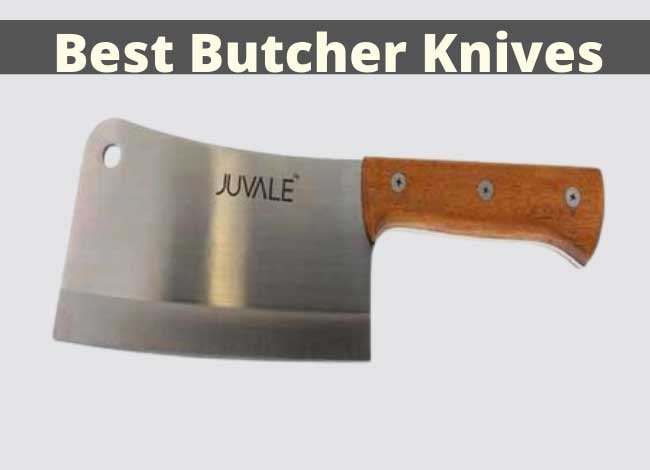
1. Juvale Heavy-Duty Meat Cleaver Review
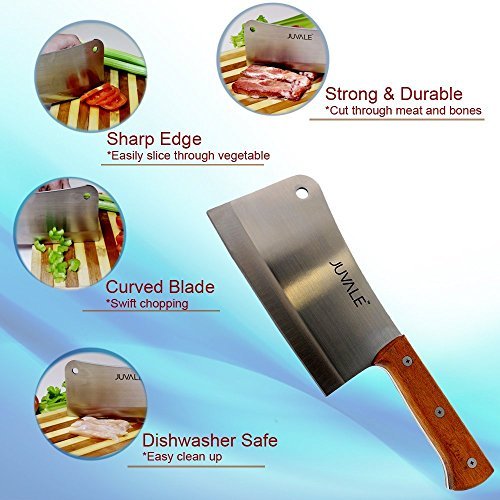
First on our list is the Juvale heavy-duty meat cleaver. This knife has a broad, approximately 8-inch blade designed for chopping and handling larger pieces of meat.
Unlike a traditional butcher knife, the cleaver’s wide blade provides a different cutting experience. It can be useful when you need a sturdy chopping tool rather than a narrow blade for detailed trimming.
The model shown in the original listing features a wooden handle with a triple-riveted design. The blade also has a hole near the upper corner for hanging storage.
One thing to remember is that a heavy cleaver requires proper handling. Do not assume it can cut through every type of bone. Hard bones and frozen foods can damage a blade that is not rated for those tasks.
 Check Price
Technical Specifications of the Juvale Heavy-Duty Meat Cleaver
| Knife Type | Meat cleaver |
| Blade Length | Approximately 8 inches |
| Blade Material | Stainless steel, according to the original listing |
| Handle | Wooden, triple-riveted design |
| Storage | Hanging hole in blade |
| Recommended Cleaning | Hand washing and immediate drying |
| Best For | Heavy-duty meat preparation and suitable chopping tasks |
PROS
- Broad blade provides a useful chopping surface.
- Wooden handle offers a traditional appearance.
- Hanging hole provides an additional storage option.
- May be convenient for preparing larger meat portions.
CONS
- Its weight and size may be uncomfortable for delicate cutting.
- Wooden handle requires proper cleaning and drying.
- Not suitable for every type of bone.
VERDICT
The Juvale heavy-duty meat cleaver is worth considering if you want a broad chopping blade for meat preparation. However, it is not a direct substitute for a traditional butcher knife or a small boning knife. Its usefulness depends on the cutting tasks you perform most often.
2. Rada Cutlery Old Fashioned Butcher Knife Review
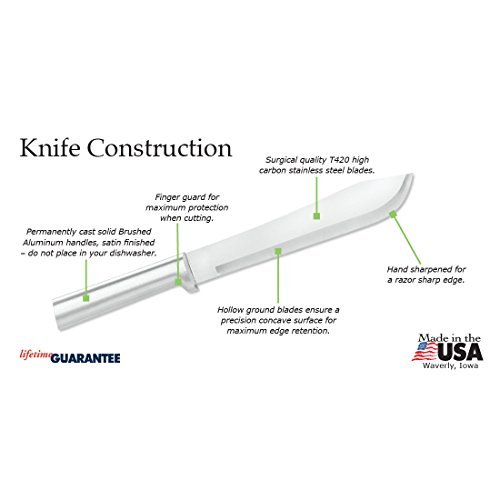
The Rada Cutlery Old Fashioned Butcher Knife is a more traditional option. Its approximately 7¾-inch blade is intended for cutting and slicing meat, while the curved shape helps with certain trimming tasks.
The model in the original review features a stainless steel blade and a brushed aluminum handle. This design provides a different feel from the wooden handles found on many other butcher knives.
For home cooks who prefer a traditional butcher knife rather than a heavy cleaver, the Rada may be a more suitable choice.
However, the aluminum handle may feel less secure if your hands are wet or greasy. Keep the handle clean and dry during use, and avoid applying more pressure than necessary.
 Check Price
Technical Specifications of the Rada Old Fashioned Butcher Knife
| Knife Type | Traditional butcher knife |
| Blade Length | Approximately 7¾ inches |
| Blade Material | Stainless steel |
| Handle | Brushed aluminum on the listed version |
| Blade Design | Traditional curved butcher blade |
| Cleaning | Hand washing recommended |
| Best For | Meat slicing and general trimming |
PROS
- Traditional blade shape works well for many meat preparation tasks.
- Stainless steel is relatively easy to maintain.
- Less bulky than a heavy meat cleaver.
- Useful for slicing and portioning meat.
CONS
- The metal handle may not suit everyone’s grip preference.
- The blade still requires regular sharpening.
- Not designed for chopping through hard bones.
VERDICT
The Rada Old Fashioned Butcher Knife is a practical option for people who regularly cut and trim meat but do not need a heavy chopping cleaver. Its traditional blade shape is useful for general meat preparation, although the handle design may not appeal to everyone.
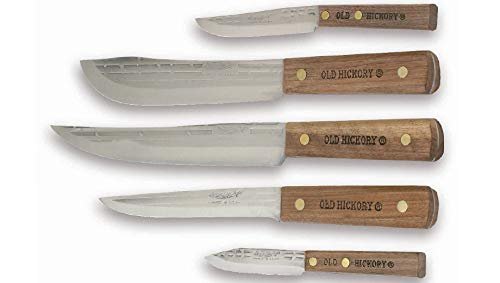
3. Ontario Old Hickory 5-Piece Knife Set Review
Old Hickory knives are known for their traditional carbon steel blades and hardwood handles. The product in this review is a five-piece knife set rather than a single butcher knife.
This distinction is important because the set includes several knives intended for different kitchen tasks, including a butcher knife, slicing knife, boning knife, and smaller utility knives.
The 1095 carbon steel construction is one of its main attractions. Carbon steel can be sharpened effectively, but it also requires careful cleaning and drying to avoid rust.
If you want several traditional kitchen knives instead of buying each one separately, this set may be worth considering.
 Check Price
Technical Specifications of the Ontario Old Hickory 5-Piece Set
| Product Type | Five-piece kitchen knife set |
| Blade Material | Carbon steel |
| Handle Material | Hardwood |
| Butcher Knife | 7-inch blade in the originally listed set |
| Slicing Knife | 8-inch blade |
| Boning Knife | 6-inch blade |
| Other Knives | Two smaller paring or utility knives |
| Maintenance | Hand wash, dry immediately, protect from rust |
PROS
- Includes different knives for different food preparation tasks.
- Carbon steel blades can be maintained with suitable sharpening tools.
- Traditional hardwood handles.
- Useful for cooks who prefer a matching collection of knives.
CONS
- Requires more maintenance than many stainless steel alternatives.
- Carbon steel can rust if left wet.
- Wooden handles should not be soaked or left in a dishwasher.
VERDICT
The Ontario Old Hickory five-piece set is suitable for someone who appreciates traditional carbon steel knives and is willing to maintain them properly. It offers more versatility than a single butcher knife, but the extra maintenance may not suit everyone.
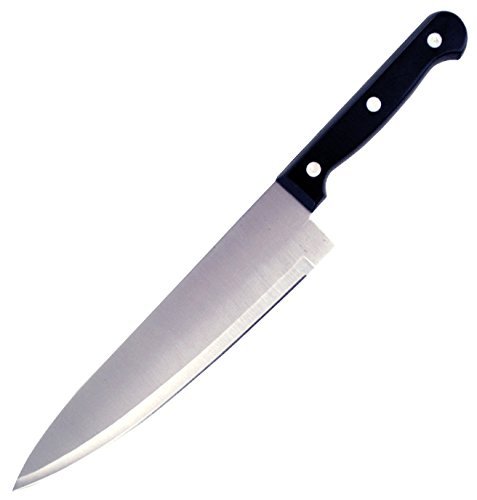
4. Professional 12-Inch Straight Butcher Knife Review
This professional-style straight butcher knife is designed for cutting larger portions of meat with long, controlled slicing motions.
A longer blade can be useful when cutting large boneless sections of beef or other meats because it allows you to make fewer strokes across the surface.
The original product listing describes a stainless steel blade with a black handle. However, the older article contains conflicting blade and handle measurements, so those measurements should be confirmed against the current product listing before purchasing.
Although a long knife can make certain cutting tasks easier, it may feel awkward in a small kitchen. Make sure you have enough cutting board space to use it safely.
 Check Price
Technical Specifications of the Professional Straight Butcher Knife
| Knife Type | Professional-style straight butcher knife |
| Advertised Size | 12-inch model; confirm current blade measurement |
| Blade Material | Stainless steel, according to the original listing |
| Handle | Black handle |
| Blade Shape | Relatively straight cutting profile |
| Recommended Cleaning | Hand wash and dry |
| Best For | Long cuts and slicing larger pieces of meat |
PROS
- Long cutting profile may help with larger meat portions.
- Stainless steel is generally easier to maintain than carbon steel.
- Suitable for controlled slicing tasks.
CONS
- A long blade can be difficult to maneuver in a small workspace.
- Not intended for striking hard bones.
- Current measurements and cleaning instructions should be confirmed.
VERDICT
This straight butcher knife may suit cooks who frequently prepare large boneless meat cuts. However, its length and current product specifications should be considered carefully. For smaller trimming jobs, a shorter knife may provide better control.
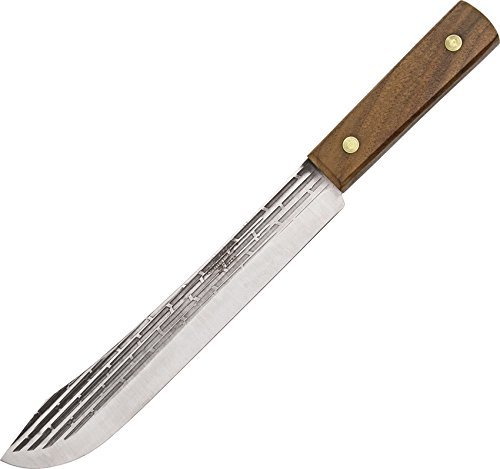
5. Ontario Old Hickory 10-Inch Butcher Knife Review
The Ontario Old Hickory 10-inch butcher knife is another traditional carbon steel option. Its long blade is designed for cutting and portioning large pieces of meat.
The knife features a carbon steel blade and a wooden handle. This combination gives it a classic appearance, but it also means you need to pay attention to cleaning, drying, and storage.
One advantage of a longer butcher blade is the ability to make smooth cuts through larger boneless portions. However, it should not be treated as a heavy bone cleaver.
Unlike stainless steel, carbon steel can develop a patina during normal use. A patina is not necessarily rust, but the blade still needs proper care to prevent corrosion.
 Check Price
Technical Specifications of the Ontario Old Hickory 10-Inch Butcher Knife
| Knife Type | Traditional butcher knife |
| Model | Ontario Old Hickory 7111, as identified in the original review |
| Blade Length | 10 inches |
| Blade Material | Carbon steel |
| Handle | Hardwood |
| Blade Design | Traditional butcher profile |
| Cleaning | Hand wash and dry immediately |
| Best For | Cutting, slicing, and portioning larger pieces of meat |
PROS
- Long blade is useful for larger cuts of meat.
- Traditional butcher knife design.
- Carbon steel blade can be sharpened with appropriate tools.
- Wooden handle provides a classic feel.
CONS
- Requires regular drying and rust prevention.
- Needs careful storage.
- May be longer than necessary for everyday small kitchen tasks.
VERDICT
The Ontario Old Hickory 10-inch butcher knife is worth considering if you prefer a traditional carbon steel blade and regularly work with larger meat portions. It is not the lowest-maintenance option, but proper cleaning and sharpening can help keep it useful for years.
Which Butcher Knife Should You Choose?
The best butcher knives are not necessarily the largest or most expensive models. The right choice depends on what you cut most often, how much space you have, and whether you are comfortable maintaining the blade.
- For heavy chopping: Consider an appropriately rated meat cleaver, such as the Juvale model discussed above.
- For general meat preparation: A traditional butcher knife such as the Rada may be more convenient.
- For several kitchen tasks: The Old Hickory five-piece set provides different blade types.
- For long slicing cuts: A longer straight butcher knife may be useful.
- For traditional carbon steel performance: The Ontario Old Hickory 10-inch butcher knife is worth considering.
Before deciding, check the latest product specifications, handle design, intended use, and available warranty. A knife that feels comfortable and suits your most common tasks will generally be more useful than one chosen only for its size.
Butcher Knife Uses
A butcher knife is useful for several kitchen tasks, especially when preparing larger pieces of meat. However, not every knife can perform every cutting task safely.
Cutting, Slicing, and Trimming Meat
One of the most common uses of a butcher knife is cutting large pieces of meat into smaller portions. A suitable blade can help you prepare steaks, roasts, and other cuts before cooking.
For better results, use a stable cutting board and make controlled cuts. Avoid trying to force a dull knife through meat, as this can cause the blade to slip.
Cutting Large Fruits and Vegetables
Some butcher knives can also be used to cut large fruits and vegetables, including melons and squash.
However, a general-purpose chef knife may be easier to control for many vegetable preparation tasks. Choose a knife that fits the food and allows you to keep the cutting board stable.
Removing Meat From Bones
A butcher knife can help separate larger pieces of meat, but a boning knife is usually better for detailed work around joints and bones.
Boning knives typically have narrower blades that provide more precise control. Trying to use a broad butcher knife for every deboning task may waste meat or make the job harder.
Preparing Chicken, Duck, and Turkey
A suitable knife can help portion poultry by cutting through meat and separating joints.
When breaking down poultry, locate the natural joints rather than attempting to chop through thick bones with a knife that is not designed for that purpose.
A heavy-duty poultry cleaver or other specialized tool may be appropriate for certain chopping jobs, but only if the manufacturer rates it for that use.
Chopping and Portioning Large Cuts
Butcher knives are particularly useful for dividing larger boneless sections of meat into smaller portions.
For chopping through suitable soft bones, use a properly rated cleaver instead. A standard butcher knife should not be used as a substitute for a bone saw or heavy-duty chopping tool.
How to Clean and Maintain Butcher Knives
Even the best butcher knives need proper care. Cleaning and maintenance affect cutting performance, blade life, and food safety.
Wash the Knife After Use
Clean your knife after preparing raw meat. Wash it carefully using warm, soapy water, and rinse it thoroughly. Keep the sharp edge facing away from your hands while washing.
Hand washing is generally the safer choice for knives with wooden handles, carbon steel blades, or delicate edges. Do not assume a knife is dishwasher-safe unless its manufacturer specifically confirms this.
Dry the Blade Immediately
Dry the knife with a clean towel after washing. This is especially important for carbon steel blades, which can rust if moisture remains on the surface.
For carbon steel knives stored for extended periods, follow the manufacturer’s recommendations for corrosion protection. A very light coating of suitable food-safe mineral oil may be appropriate for some models.
Sharpen the Blade When Needed
A dull knife requires more pressure and can slip during cutting. Maintain the blade with a sharpening method appropriate for its steel and edge angle.
A honing rod may help maintain some knife edges between sharpenings, but honing and sharpening are not exactly the same process. Sharpening removes material to restore a worn cutting edge.
Store Knives Properly
Avoid leaving unprotected knives loose in a drawer. Use a suitable knife block, sheath, blade guard, or securely mounted storage system.
Proper storage protects the cutting edge and reduces the risk of accidental contact.
Important Safety Tips When Using Butcher Knives
Butcher knives are sharp tools and should always be handled carefully.
- Use a stable cutting board: Place the board on a flat surface. A suitable non-slip mat can help prevent movement.
- Keep your hands dry: Grease and moisture can make knife handles slippery.
- Cut away from your body: Maintain control of the blade and keep your fingers away from its cutting path.
- Use the correct knife: Do not use a standard butcher knife to chop hard bones or frozen food.
- Avoid catching a falling knife: Move away and allow it to fall rather than trying to grab it.
- Prevent cross-contamination: Clean knives, cutting boards, and work surfaces after handling raw meat and before using them for ready-to-eat foods.
- Keep knives securely stored: Sharp knives should not be accessible to children without appropriate supervision.
Always follow the manufacturer’s instructions regarding sharpening, cleaning, and intended cutting tasks.
Frequently Asked Questions About the Best Butcher Knives
1. What is the best blade length for a butcher knife?
For many home kitchens, a butcher knife with a blade around 7 to 10 inches is a practical choice. Shorter knives may offer more control, while longer knives can be useful for slicing large pieces of meat. The ideal size depends on your cutting tasks and workspace.
2. Are carbon steel butcher knives better than stainless steel knives?
Carbon steel knives can provide excellent cutting performance and may be convenient to sharpen, but they require more care to prevent rust. Stainless steel knives generally resist corrosion better and are easier to maintain. Actual performance also depends on blade design and heat treatment.
3. Can a butcher knife cut through bones?
Some heavy-duty cleavers are designed to handle certain bones, but ordinary butcher knives should not be used to chop through hard bones. Always check the manufacturer’s intended use. A bone saw or another appropriate tool may be needed for tougher cuts.
4. What is the difference between a butcher knife and a meat cleaver?
A traditional butcher knife usually has a longer cutting blade for slicing and trimming meat. A meat cleaver has a broad, heavier blade intended for chopping tasks. Their designs and capabilities differ, so they should not always be used interchangeably.
5. How often should you sharpen a butcher knife?
Sharpen the knife when it no longer cuts cleanly or requires noticeably more effort. Sharpening frequency depends on how often you use the knife, the blade material, and the cutting surface. Regular maintenance can help extend the time between full sharpenings.
6. Can butcher knives go in the dishwasher?
Some manufacturers may label specific knives as dishwasher-safe, but hand washing is generally preferable for preserving the blade and handle. Wooden handles and carbon steel blades should normally be washed by hand and dried immediately.
Conclusion
A good butcher knife can make preparing meat easier and more efficient. Whether you need a long blade for slicing, a traditional knife for trimming, or a heavy-duty cleaver for suitable chopping tasks, the important thing is to choose a knife designed for the job.
The best butcher knives should have a sharp, well-constructed blade, a comfortable handle, and a design that provides control during cutting. Stainless steel is often convenient for everyday home use, while carbon steel may appeal to people who prefer traditional knives and are comfortable with additional maintenance.
Before purchasing, compare the blade length, handle material, cleaning requirements, and intended use. If you’re choosing between several models, focus on the type of meat preparation you do most often rather than buying the largest knife available.
With proper cleaning, sharpening, and safe storage, a quality butcher knife can remain a dependable part of your kitchen equipment for many years.