
Last Updated on November 4, 2026
Saltwater can be hard on a fishing reel. Spray gets into the handle and line roller, fine sand finds its way around the spool, and a powerful fish can put sustained pressure on the drag. Choosing the best saltwater spinning reel means finding a model that suits the water, fishing method and rod you actually use—not simply buying the reel with the biggest drag number.
These five reels cover different needs. A baitfeeder can be convenient for live bait, while a better-sealed reel makes more sense in regular surf and boat spray. The Top 3 comparison uses the exact products already linked in this article, with their original images and Amazon links.
Our Recommended Top 3 Best Saltwater Spinning Reel Comparison Table
| Saltwater Spinning Reel | Drag & protection | Key features | Best use | Trade-off |
|---|---|---|---|---|
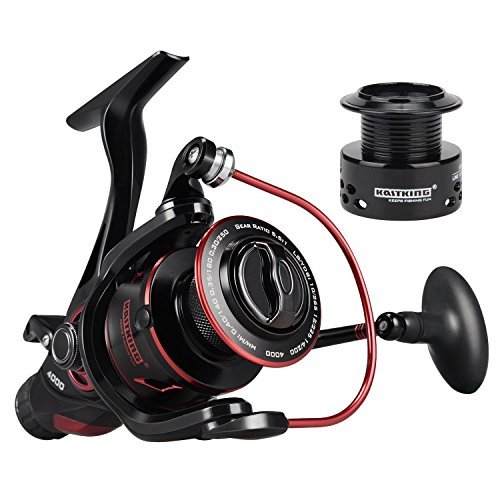 1. KastKing Sharky Baitfeeder III 6000Check Price |
Carbon-fiber drag; up to 26.5 lb; corrosion-resistant materials | Baitfeeder system, 10+1 bearings, spare spool; 5.5:1 in 6000 size | Live-bait fishing without a premium budget | Not as thoroughly sealed as high-end PENN models |
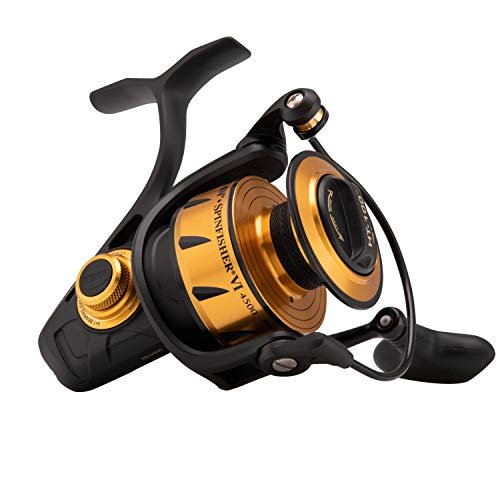 2. PENN Spinfisher VICheck Price |
IPX5 body and spool sealing; HT-100 carbon-fiber drag | CNC gear technology, full-metal body, 5+1 sealed bearings | Versatile inshore and surf fishing | Reel weight and gear ratio differ substantially by size |
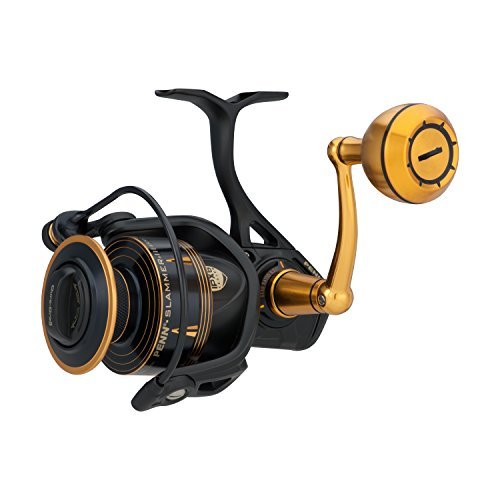 3. PENN Slammer IIICheck Price |
IPX6 body and spool sealing; Dura-Drag system | Full-metal body, CNC gears, heavy-duty saltwater design | Strenuous surf and offshore use | Heavier design; an older-generation product |
How to Choose a Saltwater Spinning Reel
Saltwater protection comes first
Reel manufacturers use corrosion-resistant materials, protected bearings and seals to slow saltwater damage. Sealing ratings describe resistance to water entering particular parts of the mechanism. A PENN Spinfisher VI with IPX5 protection is meant to withstand spray, while an IPX6 Slammer III is designed for more demanding exposure. Neither rating means you can leave the reel submerged or skip care after fishing.
Wipe the exterior and follow the manufacturer’s cleaning procedure after every saltwater outing. Keeping sand out of the reel and never blasting water into the gearbox helps protect bearings and drag components.
Choose size and line capacity for the fish and rod
A compact reel may balance a light inshore rod nicely, but it can run short of line when a fish makes a long run. A large surf reel adds capacity and power but can be tiring for repeated light casting. Size numbers are not identical across brands: compare the actual braid and mono capacity, weight, handle design and intended rod pairing before deciding.
There is no reason to use the largest size for every saltwater species. A correctly balanced setup is easier to cast, and a properly filled spool helps avoid loops.
Drag quality is more important than maximum drag
Drag lets the spool release line under pressure. A smooth and dependable drag protects your rod, knots and line better than a jerky one with an impressive claimed maximum. Carbon-fiber drag systems are common, but sealing, washer design and correct adjustment still matter. Choose a drag setting appropriate for the weakest part of the rig.
A baitfeeder is different from an ordinary front drag. It adds a secondary light-drag mode that allows a fish to take bait before the angler engages the primary drag. That can be useful for live-bait techniques without making it essential for every saltwater angler.
Gear ratio, retrieve and bearings
Gear ratio tells you how many rotor rotations occur per handle turn. It does not fully describe retrieve speed, because spool diameter and line fill also affect how much line comes in each turn. Check the listed line retrieve for the specific reel size when comparing surf and lure-fishing setups.
Do not assume a 10-bearing reel is automatically smoother or more durable than a six-bearing one. Bearing quality, placement and protection from saltwater are often more important than the total.
Body construction and comfort
Metal bodies can keep the gearing aligned when fighting larger fish. Graphite or composite frames can weigh less, making them comfortable for anglers who cast frequently. Neither is automatically best: weight, corrosion treatment, drag design and how the reel balances on the rod all matter.
Our general spinning reel guide explains the fundamentals. You can also compare a different reel style in our baitcasting reel reviews, or read our fish finder guide if you regularly fish from a boat. For another perspective on specialist reel construction, see quality saltwater spinning reel designs.
Jump to the five spinning reel reviews
Our Recommend Top 5 best saltwater spinning reel reviews 2026
With the buying factors covered, the following best saltwater spinning reel reviews take a closer look at five models for different fishing styles. The list includes a budget-friendly baitfeeder, two better-sealed PENN reels and two alternatives. Compare drag, line capacity, corrosion resistance and reel size before deciding which suits your rod and typical fishing conditions.
Each review explains what the model does well and where it may fall short, so you can choose a saltwater spinning reel based on how you actually fish rather than on bearing count or promotional ratings alone.
1. KastKing Sharky Baitfeeder III 6000 — Best for Live-Bait Fishing
The linked KastKing reel is the Sharky Baitfeeder III 6000, which should not be confused with the standard Sharky III spinning reel. The Baitfeeder has an additional drag mode for letting a fish move off with live or cut bait. A lever disengages that light setting when you start the fight and use the main drag. This can be convenient for bait presentations from shore or a boat.
For the 6000 size, KastKing lists a 5.5:1 gear ratio, 10+1 shielded stainless bearings, 26.5 lb maximum drag and a weight of approximately 16.1 oz. Its graphite body is designed to resist corrosion, and the braid-ready CNC aluminum spool comes with a spare. It is a useful value option, although it lacks the same level of water sealing found on heavier-duty PENN models.
| Linked model | Sharky Baitfeeder III 6000 |
|---|---|
| Gear ratio | 5.5:1 |
| Max drag | 26.5 lb |
| Bearings | 10+1 shielded stainless bearings |
| Construction | Graphite body and rotor; CNC aluminum braid-ready spool |
| Features | Secondary baitfeeder drag and spare spool |
| Weight | Approx. 16.1 oz for the 6000 size |
Pros: convenient baitfeeder mode, spare spool, versatile capacity and approachable price category. Cons: more moving parts to maintain; not a fully sealed premium surf reel.
2. PENN Spinfisher VI — Best Balanced Saltwater Choice
The Amazon-linked model in this review is a PENN Spinfisher VI, not the older Spinfisher V. The VI series uses IPX5-sealed body and spool construction to resist spray and water entering the drag or gearbox. Its full-metal body and sideplate support PENN’s CNC gearing, while HT-100 carbon-fiber washers provide the drag system.
This reel is a practical fit for anglers who fish from a boat, pier or beach and need reliable protection from splashes. Its standard models have 5+1 sealed stainless bearings. The actual gear ratio, drag rating, size and weight differ across the lineup, so the numbers from one model must not be applied to every Spinfisher VI. It is also worth remembering that PENN now offers newer generations; a VI listing should be evaluated as the older model it is.
| Reel series | Spinfisher VI standard spinning reel |
|---|---|
| Water protection | IPX5-sealed body and spool |
| Drag system | HT-100 carbon-fiber drag washers |
| Gearing | CNC gear technology |
| Body | Full-metal body and sideplate |
| Bearings | 5+1 sealed stainless bearing system |
| Size-specific numbers | Drag rating, gear ratio, weight and line capacity vary by size |
Pros: IPX5 protection, metal structure, well-known drag design and broad size choices. Cons: heavier than many graphite reels, with specifications that depend strongly on size.
3. PENN Slammer III — Best for Heavy Saltwater Duty
The Slammer III belongs to PENN’s older heavy-duty saltwater series. Its IPX6 body and spool sealing and sealed Dura-Drag system were designed for demanding use, including repeated spray and stronger fish. The full-metal body and CNC gearing are intended to maintain alignment under pressure.
The reason to consider a Slammer III is not that it is the newest reel available, but that its substantial construction suits anglers who value durability over minimal weight. Select the exact size for your rod and line, and confirm which model and components the listing includes. PENN’s newer Slammer IV series has its own distinct features; the linked Slammer III should not be described as if it were that newer product.
| Reel series | PENN Slammer III (older generation) |
|---|---|
| Protection | IPX6 sealed body and spool |
| Drag | Sealed Dura-Drag system |
| Construction | Full-metal body and sideplate |
| Gears | CNC gear technology |
| Sizing | Weight, drag and line capacity vary by version |
Pros: IPX6 water protection, sealed drag and sturdy construction. Cons: comparatively substantial weight, older design and greater cost than entry-level reels.
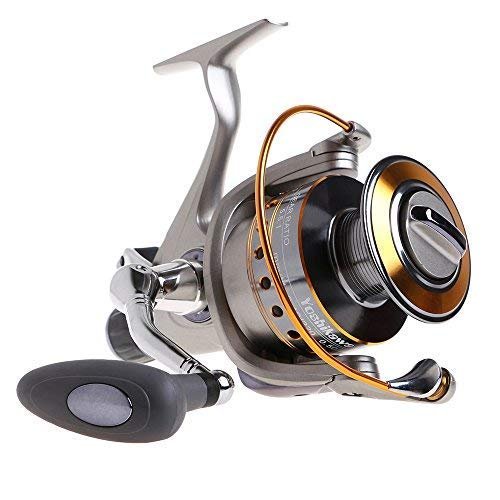
4. Yoshikawa Baitfeeder — Budget Bait-Fishing Alternative
The Yoshikawa Baitfeeder is another option built around a secondary baitfeeding setting. It can suit anglers who want a fish to pull line while holding bait, without keeping the main drag loose during the bite. Its graphite-based construction aims to keep weight manageable for casual fishing.
However, this product family appears in different sizes and configurations. Do not assume the drag or gear-ratio figures shown in a general review describe the exact unit currently selected in the listing. Check line capacity, size, handle position and whether the reel’s corrosion protection matches how often you fish in saltwater.
| Reel type | Baitfeeder spinning reel |
|---|---|
| Spool | Reel size and line capacity vary by configuration |
| Frame | Graphite-based construction in listed versions |
| Technique | Bait fishing with a secondary baitfeeder setting |
| Before purchase | Confirm the exact model, gear ratio, size and drag rating |
 Check Price
Pros: baitfeeder functionality and simple operation. Cons: variation between sizes and less documented sealing than premium saltwater reels.
5. Goture Spinning Reel — An Affordable General-Purpose Option
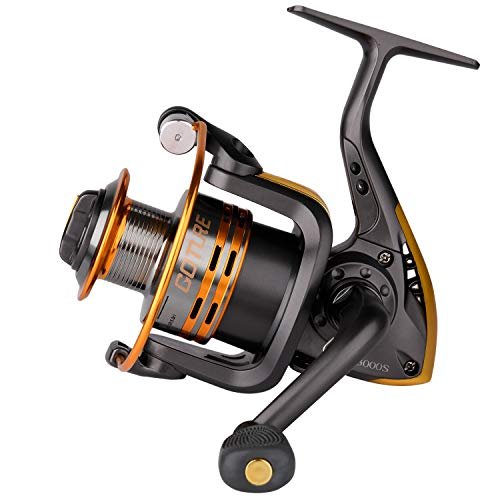
The Goture spinning reel linked here is an affordable alternative for anglers who occasionally need a general-purpose setup. Product configurations can vary; the exact weight, drag rating, bearing count and spool capacity should be checked for the particular version rather than copied from a different Goture model.
For frequent surf or offshore trips, prioritize a clearly specified sealing design and reliable parts support. For casual use, test drag smoothness, line management and how the reel balances with your rod. Follow the manufacturer’s care instructions after saltwater exposure, particularly around the bail, line roller and spool shaft.
| Reel type | Spinning reel for general fishing |
|---|---|
| Models | Multiple versions and sizes may appear in the listing |
| Material | Construction varies by model |
| Useful checks | Line capacity, drag smoothness, bail and line roller |
| Saltwater use | Verify specific corrosion protection before repeated exposure |
 Check Price
Pros: accessible entry point and simple spinning-reel format. Cons: model-specific specifications and level of saltwater protection need checking.
How to Maintain a Saltwater Spinning Reel
Before leaving home, check that the drag works smoothly, the bail closes correctly, and the spool lip has no damaging nicks. After fishing, remove loose salt and sand carefully according to the reel maker’s instructions, dry the exterior and keep the mechanism out of unnecessary direct water jets. Inspect the line roller for grit, and do not add random lubricants or furniture polish inside the reel. Deep servicing should follow the reel’s maintenance guide.
If the reel becomes rough, noisy or unusually stiff, investigate the cause before putting it back into hard service. A damaged bearing or line roller can affect line and retrieval long before the rest of the reel fails.
Frequently Asked Questions
What is the best saltwater spinning reel for surf fishing?
It depends on target species, line capacity and how much water and sand the reel will face. A well-sealed model such as the PENN Spinfisher VI or Slammer III can be a more appropriate starting point for regular surf use than an unsealed reel intended mainly for light freshwater fishing.
Does IPX6 mean a reel is waterproof?
No. IPX6 indicates resistance to powerful water jets under defined test conditions. It is not a claim that a reel can be safely submerged. Saltwater care is still necessary.
What is the difference between Sharky III and Sharky Baitfeeder III?
They are different products. The Baitfeeder III has an additional baitfeeding system that allows controlled line payout while bait fishing. The standard Sharky III is a conventional spinning reel without that extra feature.
How many bearings should a good saltwater reel have?
There is no ideal number. The quality of the bearings, their placement, resistance to corrosion and reel maintenance are more significant than the number on its packaging.
Can I use a freshwater reel in saltwater?
Occasional exposure may be manageable if the maker permits it and you clean the reel properly, but frequent saltwater use generally calls for specific corrosion-resistant components and appropriate sealing.
Conclusion
For a cost-conscious live-bait setup, the KastKing Sharky Baitfeeder III offers useful features. PENN Spinfisher VI provides a stronger balance of sealed construction and general saltwater versatility, while PENN Slammer III is aimed at heavier demands. Each has a different weight, drag system and maintenance profile. Choose the best saltwater spinning reel by your fishing environment and the exact linked model, not by a generic list of specifications.