
Last Updated on October 10, 2026
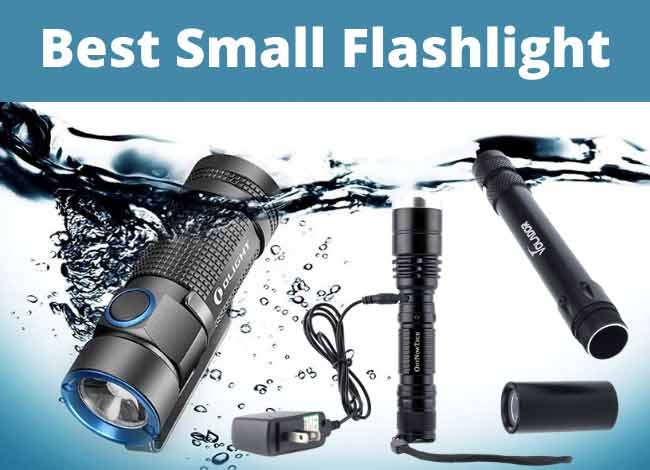
Flashlights come in different shapes and sizes. Some are large and powerful, while others are small enough to fit comfortably in your pocket. If you’re looking for something easy to carry, the best small flashlights combine portability, useful brightness, dependable battery life, and a durable design.
A compact flashlight can be useful when your car breaks down at night, the power goes out, or you need to find something in a dark space. It’s also a practical tool for camping, hiking, home repairs, and everyday carry. If daily portability is your main priority, our guide to everyday carry flashlights covers additional models and features worth comparing.
However, choosing a small flashlight isn’t just about finding the brightest model. Battery type, beam distance, runtime, and ease of use are equally important.
In this guide, we’ll look at several compact flashlight models, explain what their features mean, and help you decide which type makes the most sense for your needs.
Why Buy a Small Flashlight?
The biggest advantage of a small flashlight is portability.
Unlike a large flashlight, a compact model can fit inside a pocket, glove compartment, backpack, or emergency kit without taking up much room.
Many small flashlights also include pocket clips or lanyards that make them easy to carry.
Another advantage is convenience. You don’t have to carry a large, heavy light when all you need is enough illumination to check a fuse box, find your keys, or walk through a dark parking area.
However, small flashlights have limitations. Their compact batteries and limited space for heat dissipation can restrict how long they maintain maximum brightness.
The right choice depends on whether you need a light for close-range tasks, outdoor use, emergency preparedness, or regular everyday carry.
Our Recommended Small Flashlight Comparison
Use the comparison table below to review the existing product options. Before purchasing, confirm the model shown in each listing, because older flashlight models may have been replaced or discontinued.
| Images | Flashlight Name | Advantages | Disadvantages |
|---|---|---|---|
Value For the Money Check Price Check Price | Olight S1R II Baton EDC LED Flashlight Read Review | ||
Rechargeable Flashlight Choice Check Price Check Price | Xtreme TAC-510XL Bright Pocket Light Read Review |
Olight S1 Baton Video Review
The original Olight S1 Baton is a compact flashlight with a magnetic tailcap, multiple brightness modes, and a single-cell design. It’s one of the older models worth understanding when comparing small EDC flashlights.
Product note: This original Amazon India link has been preserved. Check the listing carefully to confirm whether it includes the original S1 Baton or a different flashlight bundle.
What to Look for in the Best Small Flashlights
Before comparing individual models, it’s helpful to understand which specifications actually matter.
1. Size and Weight
Portability is the main reason many people choose a small flashlight.
A compact light should be comfortable to hold and easy to store in a pocket or bag.
However, smaller isn’t always better.
Extremely small keychain lights may be convenient for quick tasks, but a slightly larger flashlight can offer better grip, more battery capacity, and improved heat management.
If you plan to use your flashlight every day, consider how easily you can operate its switch and carry it securely.
2. Battery Type and Charging
Small flashlights use several different battery types.
Common options include:
- AAA Batteries: Often used in slim penlights and compact keychain models.
- AA Batteries: Widely available and useful for emergency backup lighting.
- CR123A Batteries: Compact primary lithium batteries used in certain high-output lights.
- 16340 Rechargeable Batteries: Similar in size to CR123A cells but with a different nominal voltage.
- 18650 Rechargeable Batteries: Larger cells commonly used in brighter, longer-running flashlights.
- Built-In Rechargeable Batteries: Convenient when you prefer charging the entire flashlight without removing the cell.
Some flashlights accept more than one battery chemistry, while others are designed for a specific cell.
Never assume that batteries with similar dimensions are interchangeable. A rechargeable lithium-ion cell can have a substantially different voltage from a disposable battery.
Always follow the manufacturer’s compatibility instructions.
If you prefer commonly available batteries, our AA battery flashlight reviews explain the benefits and limitations of that power source in more detail.
3. Brightness and Lumens
A small flashlight can produce impressive brightness, but lumens alone don’t tell the whole story.
Lumens describe the total amount of visible light emitted by the flashlight.
For basic indoor tasks, a modest brightness setting may be enough. Walking outdoors or checking an area at a distance may require greater output.
However, a flashlight advertised at 1,000 lumens may maintain that output only briefly before reducing brightness to control heat.
When comparing the best small flashlights, consider sustained output as well as the advertised maximum.
4. Beam Distance and Pattern
Different flashlight designs produce different beam patterns.
A flood-style beam spreads light across a wider area, making it useful for close-range work.
A focused beam concentrates more light toward the center, which can help illuminate distant objects.
Some flashlights use adjustable focusing mechanisms, but many compact premium lights use fixed optics.
A fixed beam isn’t necessarily a disadvantage. It often provides a practical balance of reliability, portability, and everyday lighting.
5. Water and Impact Resistance
Durability is important when you’re carrying a flashlight outdoors.
Look for an appropriate IP water-resistance rating and a stated impact-resistance specification.
For example, IPX8 indicates protection against continuous water immersion under conditions specified by the manufacturer.
However, an IPX8 rating doesn’t mean the flashlight can withstand any depth, duration, or water pressure.
It’s also important to maintain the seals and ensure the battery compartment is properly closed.
6. Switches and Carrying Accessories
A flashlight should be easy to operate, even in poor lighting.
Some models use tail switches, while others use side buttons or twist controls.
Useful accessories may include pocket clips, lanyards, magnetic tailcaps, holsters, or replaceable O-rings.
However, accessories vary by model and package. Check what is actually included rather than assuming every flashlight comes with the same equipment.
Top Small Flashlight Reviews
Below are several compact flashlight models and product types from the original comparison.
Some are older designs, while others have product listings that may no longer match the originally named flashlight. Where reliable specifications aren’t available, it’s better to verify the exact model rather than rely on unsupported claims.
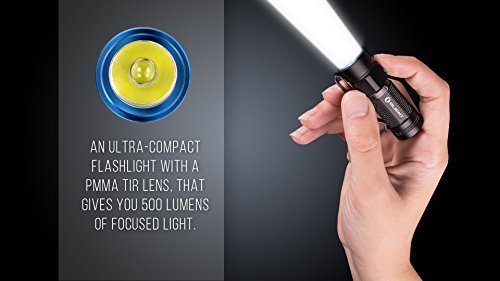
1. Olight S1 Baton — Compact EDC Flashlight
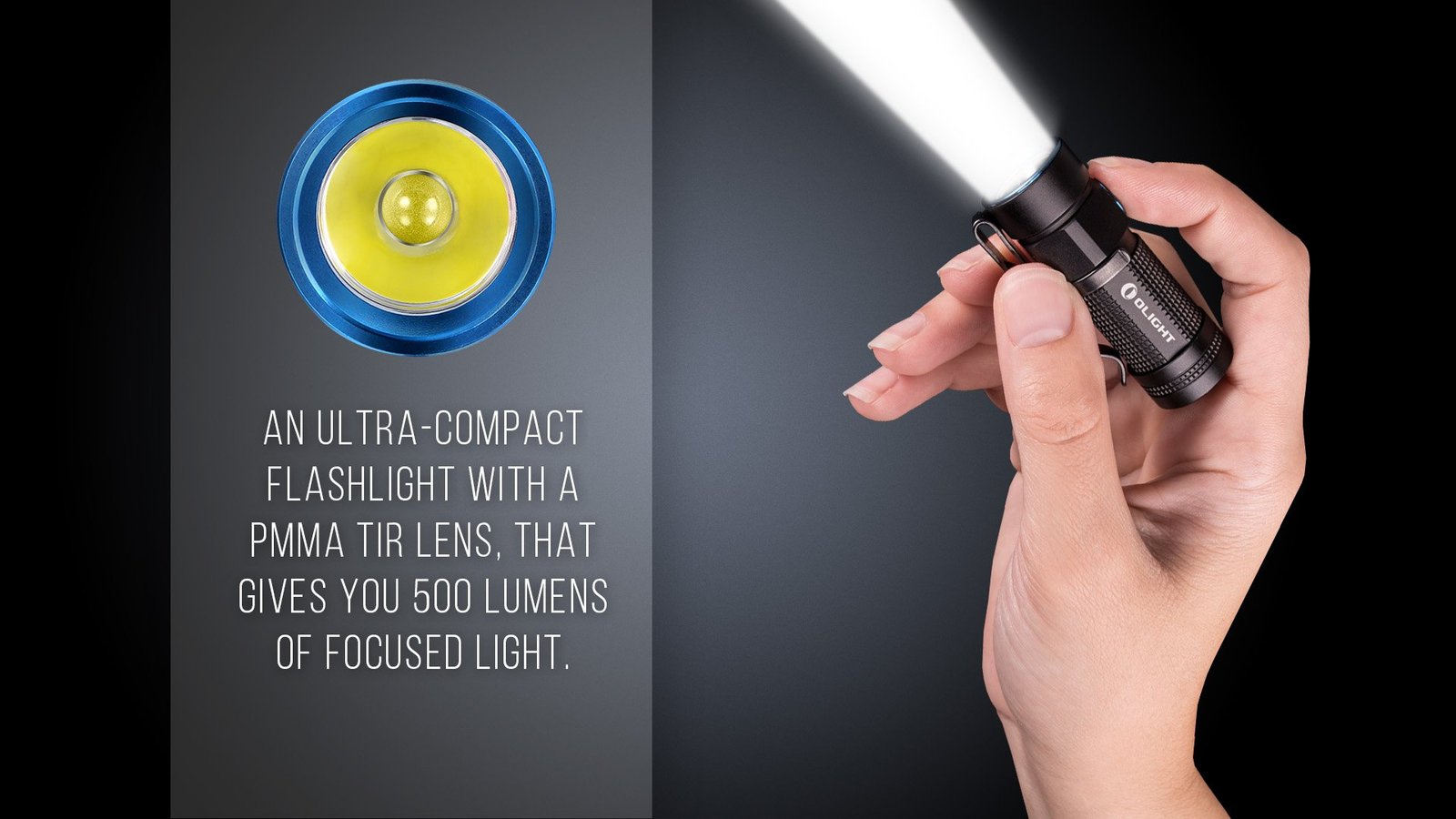
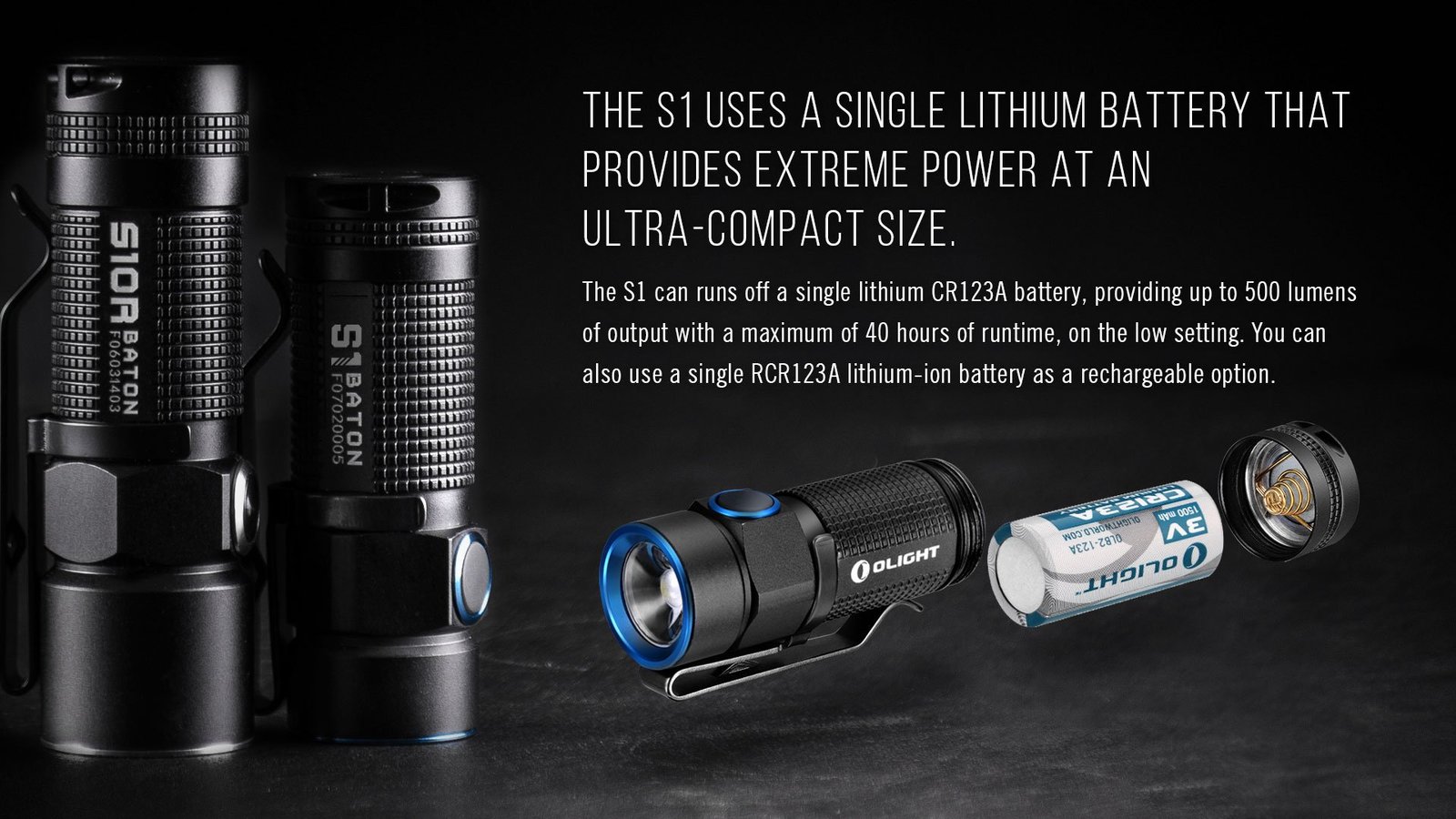
The original Olight S1 Baton is a small flashlight designed for everyday carry.
It measures approximately 61 mm long with a diameter of 21 mm, making it easy to carry in a pocket or small bag.
The light uses a Cree XM-L2 LED and produces a maximum output of 500 lumens, according to its original manufacturer specifications.
It operates on a compatible CR123A or rechargeable RCR123A battery. Battery selection must follow Olight’s instructions because not all cells with similar dimensions are suitable.
The flashlight also includes a magnetic tailcap, which allows it to attach to suitable steel surfaces.
This is useful for tasks such as inspecting equipment or working in a garage when you need both hands free.
Additional features include several brightness settings, a Moonlight mode, a strobe function, and automatic shutoff timers.
Its original ratings include IPX8 water resistance and 1.5-meter impact resistance.
However, the original S1 Baton is an older model. It doesn’t offer the charging convenience of many newer rechargeable flashlights.
Best for: People who want a very compact flashlight with a magnetic tailcap and straightforward controls.
 View Original Product Listing
Buying note: Confirm that the listing identifies the original Olight S1 Baton rather than the S1A, S1 Mini, or S1R. These are different models with different batteries and features.
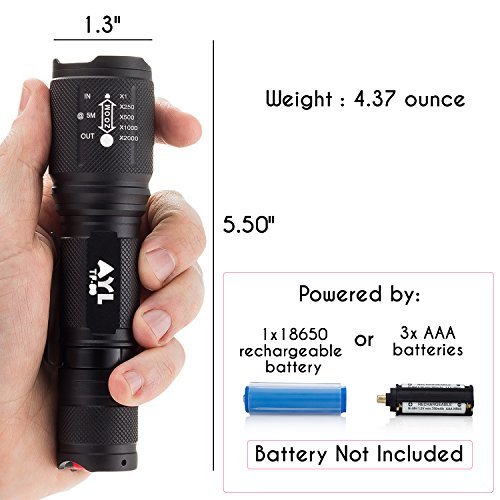
2. OutNowTech Rechargeable Flashlight — Compact Alternative
The original article included an OutNowTech flashlight advertised as a bright rechargeable model.
However, the product name and Amazon listing need verification before its advertised brightness or battery specifications can be treated as reliable.
The original description mentions a rechargeable 18650 battery, charging accessories, and adjustable focus.
These features can be useful, but they aren’t exclusive to OutNowTech. Many affordable flashlights use similar designs.
If you’re considering this type of flashlight, check the actual product specifications carefully.
Look for the battery type, whether charging is built in, the flashlight’s size, and whether the seller provides realistic brightness and runtime information.
A flashlight that uses an 18650 battery may also be noticeably larger than a keychain or single-AA model.
Best for: Buyers who prefer a rechargeable flashlight and don’t mind carrying a slightly larger light.
 View Original Product Listing
Product verification: The linked Amazon listing identifies an AYL flashlight rather than a confirmed OutNowTech model. Check the exact product before buying.
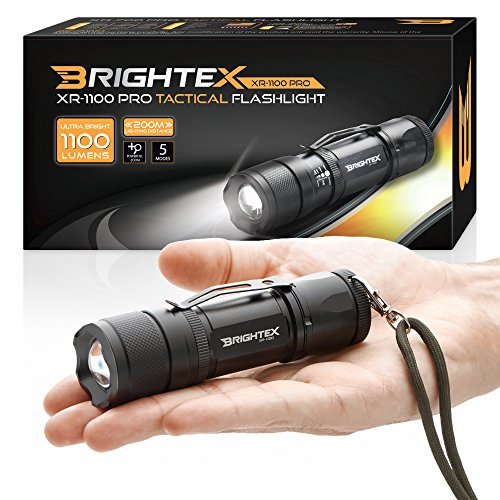
3. Brightex Small Tactical Flashlight
The original comparison also featured a Brightex compact tactical flashlight.
This model was described as having an aluminum body, adjustable beam, and multiple brightness settings.
However, the claimed brightness, beam distance, and extreme zoom specifications haven’t been reliably confirmed for the exact linked product.
If you want a flashlight with adjustable focus, the most important thing is whether the focusing mechanism works smoothly and maintains a useful beam pattern.
Also, check whether the flashlight has a documented water-resistance rating rather than relying on a general waterproof claim.
For everyday use, a dependable fixed-beam flashlight can be just as practical as a zoomable model.
Best for: Someone considering an adjustable-focus flashlight for occasional household or outdoor tasks.
 View Original Product Listing
Product verification: This Amazon link references an Esgreen product. It should not be presented as a verified Brightex purchase option without confirming the exact model.
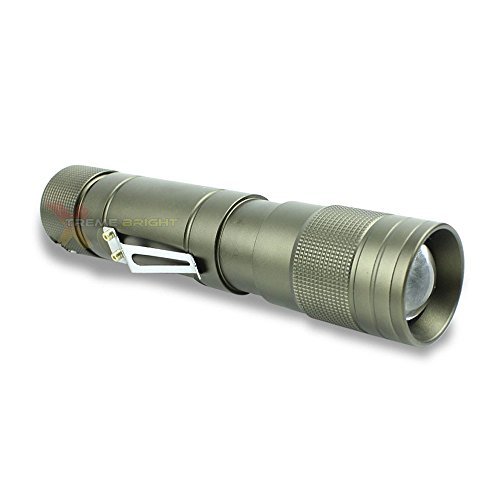
4. Xtreme Bright Pocket Flashlight — Penlight Design
Pen-style flashlights are another option when portability matters more than maximum brightness.
The original Xtreme Bright section described a slim flashlight with a pocket clip, making it convenient for inspection work.
A penlight can be particularly useful when checking a dark compartment, looking behind equipment, or working in a small space.
However, slim flashlights usually have smaller batteries and less room for heat management than larger tactical models.
That means sustained output and runtime should be considered carefully.
The original article also mentioned a magnetic tip, but this feature hasn’t been confirmed for the exact linked listing.
If a magnet is important for your work, check the manufacturer’s description before buying.
Best for: Everyday inspection tasks, tool bags, and people who prefer a slim flashlight that clips into a pocket.
 View Original Product Listing
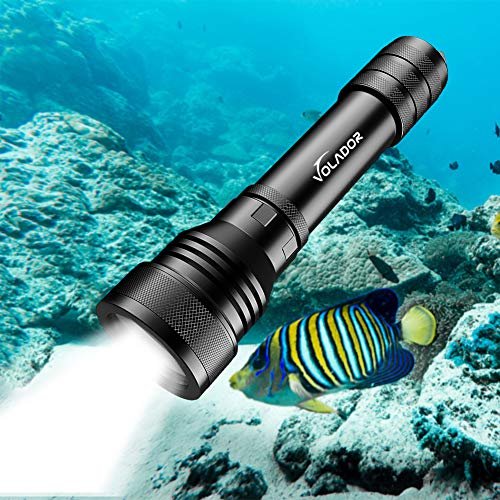
5. Volador Pen-Style Mini Flashlight
The original review included a Volador pen-style flashlight intended for everyday carry.
It was described as a compact light that uses AAA batteries and offers more than one brightness setting.
Those can be useful features, particularly for people who want a flashlight that works with batteries commonly available in stores.
However, the original article’s exact brightness, runtime, and dimensions cannot be confidently matched to the product listing.
The best approach is to check the current model number and manufacturer’s instructions.
If you’re comparing penlights, pay attention to the pocket clip, switch placement, battery replacement process, and whether the light is comfortable to hold during longer tasks.
For most close-range work, a reliable lower-output penlight can be more convenient than a much brighter but bulkier flashlight.
Best for: People who prefer a slim inspection light with replaceable batteries.
If compact penlights interest you, our AAA flashlight comparison guide covers other battery-powered alternatives.
 View Original Product Listing
Product verification: The linked item describes an underwater rechargeable flashlight, which may be different from the penlight discussed here.
6. Fenix PD25 — Compact 550-Lumen EDC Flashlight
The original Fenix PD25 is a more clearly documented compact flashlight.
According to Fenix, the original PD25 offers a maximum output of 550 lumens when powered by a suitable 16340 rechargeable lithium-ion battery.
It also supports a compatible CR123A primary lithium battery.
The flashlight measures approximately 93 mm long and 21.5 mm in diameter, with a weight of about 47 grams without a battery.
Its maximum rated beam distance is 130 meters, making it useful for everyday tasks and some outdoor applications.
The PD25 includes four brightness levels and a strobe function.
It uses a tail switch for switching the light on and off and a separate side switch for selecting output levels.
The manufacturer’s published maximum runtime is 53 hours, although that figure refers to a low-output setting rather than continuous operation at maximum brightness.
Its compact aluminum construction, pocket clip, and simple control arrangement make it a practical choice for users who want something brighter than a basic penlight.
However, distinguish the original PD25 from the newer PD25R, as these models have different charging and performance specifications.
Best for: People who want a compact, well-documented flashlight with replaceable battery options and strong performance for its size.
Small Flashlight Comparison: Which Type Is Best?
| Flashlight Type | Main Advantage | Important Limitation | Best Use |
|---|---|---|---|
| Keychain flashlight | Extremely small | Limited battery capacity | Quick everyday tasks |
| AAA penlight | Slim and easy to carry | Usually modest sustained output | Inspection and close-up work |
| AA flashlight | Widely available batteries | Brightness depends on design and cell type | Daily use and emergency kits |
| CR123A/16340 flashlight | High output in a compact body | Battery compatibility needs attention | EDC and outdoor activities |
| 18650 flashlight | Greater battery capacity | Usually larger and heavier | Longer tasks and higher output |
Best Small Flashlights for Different Situations
The best small flashlight for you depends on how you plan to use it.
For Everyday Carry
A compact flashlight with a pocket clip, simple controls, and a useful low mode is usually a practical choice.
Battery replacement or charging should also be convenient.
Choose something you can comfortably carry every day rather than focusing only on maximum output.
For Car Emergencies
Look for a flashlight that is easy to store in a vehicle and comfortable to operate while wearing gloves.
Useful features include a secure grip, adequate battery life, and a beam that illuminates close-range work areas.
For example, you might need light while checking a tire, reading labels under the hood, or locating equipment in the trunk.
Keep the flashlight away from moving engine parts and hot surfaces.
For Camping and Hiking
Consider water resistance, runtime, and the type of beam you need.
A low brightness setting is helpful for use around a campsite, while a brighter mode can be useful when walking outdoors.
However, a dedicated headlamp may be more comfortable if you frequently need both hands free.
For Home Repairs
A small flashlight with a magnetic base or convenient clip can be helpful when inspecting shelves, cabinets, appliances, or equipment.
For close-up work, a wide and even beam may be more useful than maximum beam distance.
For Emergency Preparedness
Choose a dependable model with a battery system you can maintain.
If you prefer disposable batteries, follow the manufacturer’s storage recommendations and check them periodically for leakage.
For rechargeable lights, make sure you have a way to charge them when needed.
If you’re preparing a dedicated emergency kit rather than just choosing a daily flashlight, our survival and emergency flashlight guide explores other lighting options intended for preparedness.
How to Compare Brightness and Battery Runtime
One of the most common mistakes when shopping for flashlights is comparing only the maximum lumen rating.
A flashlight can briefly produce a high output but reduce brightness as the battery drains or the electronics heat up.
That’s why runtime should always be considered alongside the corresponding brightness level.
For example, a flashlight advertising 1,000 lumens and several hours of runtime may not maintain 1,000 lumens throughout that period.
Check whether the manufacturer provides a runtime chart showing brightness step-downs.
For everyday use, a stable Medium or Low setting can be more valuable than a very short Turbo mode.
Are Small Flashlights Waterproof?
Some small flashlights have impressive water-resistance ratings, but not every compact flashlight is designed for the same conditions.
Look for a documented IP rating rather than relying on words such as waterproof or weatherproof.
Also, remember that water resistance can decline when O-rings become worn or the battery compartment is damaged.
If a flashlight gets wet, follow the manufacturer’s instructions for inspection and drying.
For outdoor activities involving heavy rain or water exposure, choose a model specifically rated for those conditions.
How to Choose a Reliable Small Flashlight in 2026
When comparing the best small flashlights in 2026, it’s worth looking beyond older product rankings.
Flashlight technology has improved, with many current designs offering better charging convenience, improved efficiency, and more detailed performance specifications.
Before purchasing, consider these questions:
- Do you need replaceable batteries? AA and AAA models can be convenient when spare cells are readily available.
- Would built-in charging be easier? Many newer rechargeable flashlights support direct charging.
- How bright does it need to be? Choose output based on your actual tasks rather than the highest advertised number.
- How long will you use it? Compare runtime at a practical brightness setting.
- Will it get wet? Check the manufacturer’s water-resistance rating.
- Is the model still available? Some older flashlights may only be sold as remaining stock or used products.
- Does the product listing match the review? Confirm the exact model number, battery type, and accessories.
If you want a light that can be charged without repeatedly replacing disposable batteries, compare the options in our rechargeable LED flashlight buying guide.
Best Mini Flashlights: Controls and Everyday Functionality
One reason mini flashlights are convenient is that many can be operated with one hand.
Some models use a twist mechanism, while others have a side switch or tail button.
Each design has advantages.
A tail switch can be easy to locate by feel, while a side switch may make changing brightness levels more convenient.
Some flashlights also include a lockout function to help prevent accidental activation inside a pocket or bag.
However, controls vary between models, so it’s worth checking the user manual before buying.
For example, a flashlight with several modes may be useful if you regularly switch between close-range tasks and brighter outdoor lighting.
For someone who only needs occasional emergency illumination, a simpler interface may be preferable.
Should You Choose a Keychain Light or a Pocket Flashlight?
If you want the smallest possible flashlight, a keychain model may be more convenient than a traditional handheld light.
However, keychain models generally have smaller batteries and may offer shorter runtimes.
A pocket flashlight is usually larger, but it may provide a more comfortable grip and greater flexibility for everyday tasks.
For people who want a dedicated handheld light without carrying something bulky, our compact pocket flashlight reviews cover other small designs worth considering.
The best option depends on how frequently you use the flashlight and whether portability or sustained performance matters more.
Final Verdict: Which Small Flashlight Should You Buy?
Choosing the best small flashlight comes down to finding the right balance of portability, battery life, brightness, and durability.
For people who want a classic compact light with a magnetic tailcap, the original Olight S1 Baton is still an interesting design, although it is an older model.
The original Fenix PD25 is another documented option, offering up to 550 lumens from a compact body.
For users who prefer a slim inspection light, a penlight may be more comfortable to carry and easier to use for close-range work.
However, several products in the original comparison have uncertain model identities or mismatched retailer links. Those listings should be checked carefully before purchasing.
Our recommendation: Don’t choose a flashlight based solely on a large lumen number or an old best-seller label. Look for reliable specifications, realistic runtime, a suitable battery system, and a size that fits how you actually use it.
A good small flashlight should be easy to carry, simple to operate, and ready when you need it.
FAQs About Small Flashlights
1. What is the best small flashlight for everyday carry?
The best choice depends on your needs. Look for a compact flashlight with a comfortable switch, useful brightness levels, dependable battery life, and a secure pocket clip. A model with moderate sustained output may be more practical than one advertising extremely high peak lumens.
2. Are mini flashlights bright enough for outdoor use?
Yes, many compact flashlights provide enough light for camping, walking, and everyday outdoor tasks. However, beam pattern, runtime, and sustained brightness matter as much as the maximum lumen rating.
3. How long does a small flashlight battery last?
Runtime varies considerably between models and brightness settings. A flashlight may run for only a short period at maximum output but last many hours or even days on a very low setting. Always compare runtimes at the brightness level you expect to use.
4. Are rechargeable small flashlights better than AA or AAA models?
Rechargeable flashlights are convenient for frequent use, especially when they support direct charging. AA and AAA flashlights are useful when you prefer replaceable batteries. Neither type is automatically better; the right choice depends on your charging access and how often you use the light.
5. What is the difference between a small flashlight and a tactical flashlight?
Small flashlights are categorized mainly by their compact size. Tactical flashlights are generally designed around features such as rapid-access controls, robust construction, or specialized professional requirements. A flashlight can be both small and tactical, but not every compact light is intended for tactical applications.
6. What should I check before buying an older flashlight model?
Confirm the exact model number, battery compatibility, manufacturer specifications, product condition, and current warranty coverage. Also verify that the retailer listing matches the flashlight being reviewed, since older models are sometimes replaced by newer products.