
Last Updated on October 30, 2026
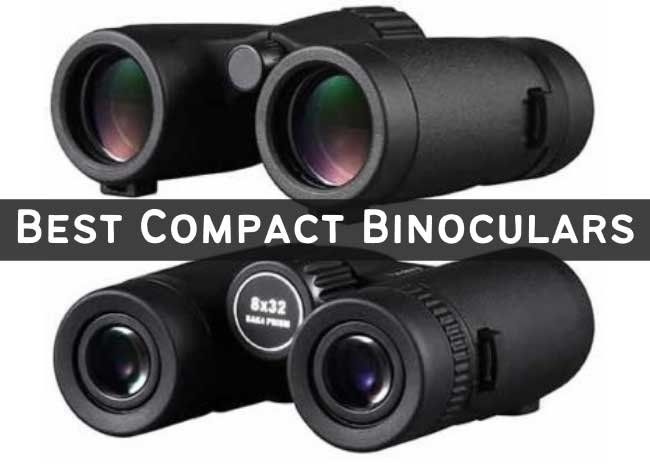
Compact binoculars make it easier to watch birds, enjoy a concert, or pick out details on a hiking trail without carrying a heavy pair around your neck. The best compact binoculars combine a steady, clear view with a body you’ll actually want to pack.
For most people, 8x magnification with 25mm objective lenses is a comfortable starting point. You get a useful field of view and lightweight handling. An 8×32 pair can be better for birdwatching, though it takes up more space. Below are three practical compact picks, followed by other models worth considering. Compare lens size, comfort, and weather protection before choosing.
SAVE TIME: Jump to Our Top 3 Compact Binoculars
Best Compact Binoculars 2026: Top 3 Comparison Chart
| Product & Amazon | Magnification / lens | Key details | Best for | Main trade-off |
|---|---|---|---|---|
 1. Nikon Trailblazer 10×25 ATBCheck Price |
10×25 | 342-ft field of view at 1,000 yd; 9.9 oz; waterproof/fogproof | Daytime travel and distant subjects | 10mm eye relief is tight for glasses wearers |
 2. Wingspan Optics FieldView 8×32Check Price |
8×32 | 8x view with larger 32mm objective lenses | Comfortable handheld wildlife watching | More room in a bag than a folding 10×25 |
 3. OutNowTech Ultra Compact Folding 10×25Check Price |
10×25 | Foldable pocket-oriented format for daylight use | Concerts, sightseeing and easy packing | 10x magnification magnifies hand shake; small lenses struggle at dusk |
Nikon figures follow its published 10×25 Trailblazer ATB specifications. An 8×32 is compact for a daypack rather than a small pocket. For 10×25 models, daylight viewing and steady handling matter most.
Top 3 Best Compact Binoculars Reviews
1. Nikon Trailblazer 10×25 ATB — Best Pocket-Size All-Rounder
Nikon Trailblazer 10×25 ATB has a 342-foot field of view at 1,000 yards and waterproof, fogproof construction. Its 10mm eye relief is relatively short for glasses wearers. The 10x magnification suits distant daytime subjects, though a steady hand helps.
At 9.9 ounces, the folding Nikon is light enough for a day bag. Its 342-foot field of view at 1,000 yards is useful for tracking movement, but its short 10mm eye relief is a genuine drawback if you wear glasses.
2. Wingspan Optics FieldView 8×32 — Best for Casual Birdwatching
Wingspan Optics FieldView 8×32, formerly marketed as Polaris Optics Spectator, offers a comfortable 8x view and larger lenses than a pocket 25mm model. It’s a useful size for casual birdwatching, especially if you prefer a substantial grip over the smallest possible folded body.
The 32mm lenses give an approximately 4mm exit pupil, compared with 2.5mm on a 10×25 pair. That can make eye placement feel easier during longer viewing sessions. The larger body is less pocketable, so it makes more sense for a daypack than a small jacket pocket.
 Check Price
3. OutNowTech Ultra Compact Folding 10×25 — Best for Occasional Travel
The OutNowTech folding 10×25 is easy to pack for occasional sightseeing, concerts, and outdoor activities. Ten-power magnification brings distant objects closer but needs steadier hands than 8x. Its small objectives are best suited to daylight.
For occasional travel, the folding body is convenient, but 10x power makes hand movement more noticeable than 8x. Consider it for bright outdoor conditions rather than low-light birdwatching.
 Check Price
Other Models to Consider
These additional models offer different balances of portability, eye relief, optical performance, and price. Their reviews remain below so you can compare the features that matter most to you.
Nikon Trailblazer II 8×25 — Best Overall for Travel
The Nikon Trailblazer II 8×25 is a strong all-round choice for vacations, casual birdwatching, and outdoor sports. Its folding roof-prism body is small enough for a day bag, while 8x magnification is relatively easy to hold steady. You don’t have to struggle with a narrow view when a bird or player moves across the scene.
Nikon specifies an 8.3-degree field of view, equivalent to approximately 435 feet at 1,000 yards, along with an 8.2-foot close-focus distance and 10.9-ounce weight. Waterproof and fogproof construction makes it suitable for damp mornings and changing weather. The wide view is particularly helpful for beginners learning to follow moving wildlife.
Its main limitation is 10mm eye relief, which may make it difficult to see the entire field while wearing glasses. The 25mm lenses are also better suited to daylight than dusk. For most people who want an easy-to-pack, easy-to-use pair, though, the Trailblazer II is an excellent place to start.
- Pros: Wide field of view, folding design, lightweight body, waterproof protection.
- Cons: Short eye relief; limited low-light brightness.
Vortex Vanquish 8×26 — Best for Day Hikes
Vortex Vanquish 8×26 is well suited to hikers who want compact binoculars with a secure, comfortable grip. Its reverse-Porro design has a different shape from the slimmest roof-prism models, but at 12.7 ounces and 4.3 inches tall it is still easy to carry in a daypack.
The 352-foot field of view at 1,000 yards makes scanning hillsides or trees straightforward, and the 7.6-foot close focus lets you enjoy butterflies or flowers nearby. With 15mm eye relief, it may feel more forgiving than very short-eye-relief pocket models. Vortex’s lifetime VIP warranty adds appeal for regular outdoor use.
The trade-off is that it doesn’t fold as flat as some tiny pocket binoculars. Its 26mm objectives are fine in daylight but won’t match larger lenses in fading light. Choose the Vanquish if a steady feel in the hands matters more than the smallest possible folded size.
- Pros: Useful close focus, comfortable 8x view, manageable weight, warranty.
- Cons: Less pocket-flat; limited twilight performance.
Pentax AD 8×25 WP — Best for Eyeglass Wearers
People who wear glasses often struggle with compact binoculars because their eyes sit farther from the eyepieces. Pentax AD 8×25 WP stands out with 21mm eye relief, offering more space while still seeing a complete image. The folding roof-prism design weighs about 10.6 ounces and feels well suited to travel.
Fully multicoated optics and phase-corrected prisms help deliver a clean, contrast-rich view. The nitrogen-filled waterproof body is practical for walks in damp weather, and the binoculars focus as close as about 9.8 feet. The twist-up eyecups also make adjusting the fit easier.
At 288 feet per 1,000 yards, the field of view is narrower than Nikon’s or Vortex’s. Tracking fast-moving birds can therefore take a little more effort. Still, if comfortable viewing with glasses is your priority, the Pentax is one of the most appealing pocket-size choices.
- Pros: Generous eye relief, light weight, waterproofing, good optical coatings.
- Cons: Narrower field of view.
ZEISS Terra ED Pocket 8×25 — Best Premium Choice
The ZEISS Terra ED Pocket 8×25 appeals to frequent travelers and nature enthusiasts who want better optics in a genuinely portable design. Its folding body weighs 10.9 ounces, while 8x magnification provides a comfortable balance between detail and image stability.
ZEISS uses ED glass and anti-reflective coatings, with a 357-foot field of view at 1,000 yards and close focus down to 6.2 feet. That short focusing distance is useful for observing insects or plants as well as distant subjects. Eye relief is 16mm, and the nitrogen-filled body is water-resistant.
The drawback is its premium price. It also remains a 25mm binocular, so it cannot gather as much light as a full-size pair at dusk. If you value clear daytime views, a refined focusing experience, and compact dimensions, however, the Terra ED Pocket is a satisfying choice.
- Pros: ED glass, close focus, folding body, comfortable daytime optics.
- Cons: Higher cost; small-lens limitations in low light.
Celestron Nature DX 8×32 — Best for Birdwatching
Celestron Nature DX 8×32 is a good reminder that the best compact binoculars don’t always have to fit in a coat pocket. Its larger 32mm lenses create a 4mm exit pupil, which makes eye placement more forgiving and can improve comfort as the light changes. For birdwatching from a trail or nature reserve, that advantage can be worth carrying a slightly larger pair.
It offers fully multicoated lenses, phase-coated BaK-4 prisms, a 388-foot field of view at 1,000 yards, and close focus of 6.5 feet. Eye relief is 17.5mm, helpful for many glasses wearers. The nitrogen-filled, waterproof body is designed for outdoor use, and the adjustable eyecups make positioning easier.
At 18 ounces, it is heavier than the pocket models above. If minimum size is your priority, choose a 25mm pair instead. For longer birdwatching sessions, the brighter view and more relaxed handling make the Nature DX an excellent companion.
- Pros: Brighter 32mm view, useful field of view, close focus, comfortable eye relief.
- Cons: Heavier and less pocketable.
How to Choose the Best Compact Binoculars
8×25 vs. 10×25: Which magnification works best?
In 8×25, the first number is the eight-times magnification, and the second is the 25mm diameter of the front lenses. Eight-power binoculars are usually easier to keep steady and often show a wider scene. Ten-power models enlarge distant details but also amplify hand shake. For concerts, travel, and moving birds, 8x is a sensible default. Choose 10x when you mainly observe distant, fairly still subjects in good daylight.
Lens diameter, exit pupil, and low light
A smaller objective keeps weight down but collects less light. Divide objective diameter by magnification to calculate exit pupil: 8×25 produces about 3.1mm, while 8×32 produces 4mm. A larger exit pupil can make viewing more comfortable in dim conditions. Lens coatings and overall optical quality also matter, so don’t choose by size alone.
Field of view and close focus
A wider field of view helps you locate birds or follow fast-moving action. Close focus tells you how near a subject can be before the binoculars lose sharpness. For watching butterflies and nearby wildlife, a short close-focus distance is especially useful.
Eye relief and weather protection
If you wear glasses, consider at least 15mm of eye relief, and preferably more if you need extra room. Try the eyecups with your own glasses when possible. Rubber armor helps grip and protects against minor bumps, but waterproofing requires proper seals. Nitrogen- or argon-filled models are also designed to resist internal fogging.
If you mostly watch subjects from one fixed position, a monocular can be a lighter alternative. Our guide to the best monoculars explains what to consider.
More Binocular Options for Different Needs
If you have room for larger objective lenses, these two alternatives are worth comparing with the compact models above.
Bushnell Legend Ultra HD 10×42
Bushnell Legend Ultra HD uses 42mm lenses, so it is a larger wildlife binocular rather than a pocket model. ED Prime glass and optical coatings aim to improve detail and contrast, while the larger objectives make viewing more comfortable in dull weather. It’s better suited to a backpack than a jacket pocket.
 Check Price
 Check Price
Bushnell Legend Binocular Video
Vortex Diamondback 10×42
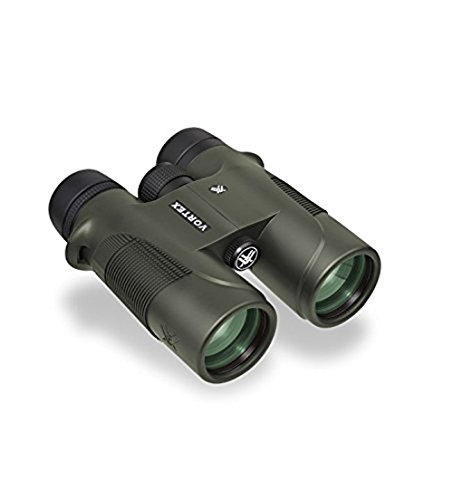
Vortex Diamondback 10×42 binoculars offer larger objective lenses and 10x magnification for watching distant wildlife. They’re bulkier than pocket binoculars but a useful choice when you have room in a backpack and want a more substantial viewing experience.
 Check Price
 Check Price
How to Care for Compact Binoculars
- Remove loose dust with an air blower or soft lens brush before wiping.
- Use a clean microfiber cloth and optics-safe cleaner, applied to the cloth rather than directly to the lenses.
- Dry the body after rain and let the binoculars air out before storage.
- Protect the lenses with caps or a soft case in your bag.
- Avoid leaving binoculars in a hot car or dropping them on hard surfaces.
Compact Binoculars FAQs
What are the best compact binoculars for birdwatching?
Nikon Trailblazer 10×25 ATB is a compact choice for daytime travel, although its short eye relief may not suit glasses wearers. If you prefer a steadier 8x view and don’t mind a larger daypack model, Wingspan Optics FieldView 8×32 is worth considering. Celestron Nature DX 8×32 is another option for longer birdwatching sessions.
Are 10x binoculars better than 8x?
Not always. Ten-power magnification brings details closer but makes hand shake more noticeable. Eight-power binoculars often have a wider view and are easier for beginners.
Can compact binoculars be used at night?
They are most useful in daylight. Small lenses collect less light than 42mm models, making dim scenes harder to see clearly.
Are all compact binoculars waterproof?
No. Check the product’s stated waterproof and fogproof features. A rubber coating alone does not make the optical body watertight.
Is it safe to look at the sun through binoculars?
Never look directly at the sun through binoculars. Doing so can cause immediate, permanent eye damage. Ordinary binoculars are not designed for solar observation.
Final Verdict
For a folding travel pair, Nikon Trailblazer 10×25 ATB combines compact handling with waterproof and fogproof construction, though its 10mm eye relief is a drawback for glasses wearers. Wingspan Optics FieldView 8×32 is better suited to casual birdwatching when a slightly larger body is acceptable, while OutNowTech Ultra Compact Folding 10×25 is an easy-to-pack option for occasional daylight outings. If you prefer an 8×25 model with more comfortable eye relief or refined optics, compare the other options above before deciding.
Choose the best compact binoculars for the places you visit and the subjects you watch, rather than simply chasing the highest magnification. For more general information about how binoculars are used, see this overview of binocular uses.
So, Here are top 5 compact binoculars list. But Still i need to know which one personally you prefer?
I have tested all 5 binoculars personally. And, I have checked all features and functionality too and thus i listed here. So, all are good and you can buy one of them.
If you are looking for very high quality binocular then go with Bushnell Legend Ultra HD but if you are looking for cheap but standard quality binocular then go with Nikon trailblazer 10×25.